
The wheat market enters 2025 with more weight and urgency than almost any moment in the last decade. At a projected USD 210.74 billion, the market is not only massive it’s undergoing a structural shift driven by food security mandates, agtech innovation, sustainability pressures, and geopolitical trade realignments.
With global consumption nudging close to 805 million metric tons, and future demand on track to push the market to nearly USD 308 billion by 2034, 2025 stands out as the first year where buyers must recalibrate strategies. The ground rules of procurement, partnerships, and production capacity are changing fast and this year becomes the pivot point.
Below, we break down what buyers need to know now, who controls the competitive landscape, and what’s coming next through 2030.
Key Takeaways for 2025
- 2025 is a buyer’s inflection year production volatility, new wheat varieties, and shifting trade dynamics are redefining price stability and supply access.
- Asia-Pacific commands 51% of global market share, driven by food security initiatives and record wheat utilization across emerging markets.
- North America is the fastest-growing region, thanks to aggressive export expansion strategies and strong government support.
- Agtech adoption becomes the new productivity engine, with satellite monitoring, AI advisory systems, and carbon tracking pushing the next efficiency leap.
- Premium-grade and sustainably grown wheat varieties are gaining traction, expanding opportunities for farmers, millers, and high-quality ingredient manufacturers.
Want to Explore More? Get a Free Sample Report:
https://www.towardsfnb.com/download-sample/5668
The 2025 Buyer Playbook: What Really Drives Decisions Now
Whether buyers sit in milling companies, food manufacturing, feed operations, or government procurement offices, the purchasing mindset in 2025 is more strategic than ever. Here’s what’s shaping decisions:
1. Reliability Over Price
- With climate swings affecting major producers like France, Ukraine, and parts of Canada, consistent quality and supply security outweigh cost considerations. Buyers want sourcing stability and predictable grades.
2. Traceability and Sustainability
- Organic certification, regenerative farming practices, carbon-footprint tracking, and ESG compliance influence procurement especially among multinational food and beverage brands.
3. Mill-Friendly Compatibility
- The rise of new wheat varieties (e.g., Borlaug 100, Firefly, Dozer CL Plus) creates demand for grains that optimize extraction rates and consistency in baked goods. Millers want varieties tested, validated, and supported by agronomy data.
4. Logistics Efficiency
- Global buyers increasingly choose suppliers that provide integrated transport, storage, and fleet-managed delivery options.
5. Digital Transparency
- Procurement teams now expect satellite-backed farm monitoring, yield estimates, and pricing forecasts built on real-time data.
- This shift explains why industry leaders invest aggressively in tech—to win deals, companies must provide grain + data + reliability as a bundled offering.
In-Depth Company Profiles: The Market Leaders in 2025
Below are 10 detailed company profiles, covering strengths, recent moves, and future outlooks designed to give buyers and investors a practical lens into competitive positioning.
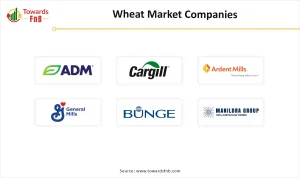
1. Archer Daniels Midland (ADM)
- Overview: ADM is one of the world’s largest agricultural processors, with deep integration across grain origination, milling, transport, and ingredient systems.
- Recent Moves: The company continues to expand its sustainable sourcing programs and digital traceability frameworks, especially across North America and Europe.
- Competitive Edge: ADM’s scale in origination and logistics positions it as a reliable partner for buyers prioritizing supply security.
- Outlook: Expect ADM to align more aggressively with regenerative agriculture and carbon-reduction initiatives, making it a strong bet for sustainability-focused buyers.
2. Cargill
- Overview: A global powerhouse, Cargill operates across grain trading, risk management, processing, and transportation.
- Recent Moves: Strengthened digital risk-management tools and expanded wheat-based ingredient lines to meet growing B2B needs.
- Competitive Edge: Its unmatched logistics network and global trading presence.
- Outlook: As climate risk intensifies, Cargill’s investment in predictive analytics will likely give it a performance edge in market forecasting.
3. Ardent Mills
- Overview: North America’s leading flour-milling company with a strong innovation track record.
- Recent Moves: In 2024, Ardent Mills launched new ingredient solutions aligned with its ESG roadmap signaling deeper commitments to healthier and cleaner label products.
- Competitive Edge: Highly adaptable product innovation pipeline, trusted by major bakery, foodservice, and retail clients.
- Outlook: Expect increased expansion into specialty wheat varieties and sustainability-certified lines.
4. Bunge Limited
- Overview: A global agribusiness leader engaged in milling, farming, processing, and trading.
- Recent Moves: In 2025, Bunge exited several North American corn milling operations to sharpen its strategic focus while collaborating with Repsol on renewable fuel development in Europe.
- Competitive Edge: Versatility across feed, food, and renewable energy markets.
- Outlook: Bunge will likely invest deeper into oilseed–grain integration and renewable-fuel crops, strengthening its European footprint.
5. Grain Craft
- Overview: One of the largest independent flour milling companies in the U.S.
- Recent Moves: Acquired three Central Milling flour mills in late 2024 expanding its geographic reach and production flexibility.
- Competitive Edge: Highly specialized mills and a commitment to premium grades for artisan and industrial baking.
- Outlook: M&A activity is expected to continue as Grain Craft positions itself against mega competitors.
6. The Scoular Company
- Overview: A major grain and ingredient supplier with a strong presence across North America and Asia.
- Recent Moves: Expanded investments into supply-chain optimization and marine transport efficiency.
- Competitive Edge: Exceptional trade connectivity between American farmers and Asian import markets.
- Outlook: With Asia Pacific demand rising, Scoular stands to gain significantly through its logistics-first strategy.
7. Louis Dreyfus Company (LDC)
- Overview: A global agricultural merchant deeply entrenched in grain origination and commodity trading.
- Recent Moves: Continued investment in carbon-neutral logistics and digital transaction systems.
- Competitive Edge: Longstanding buyer relationships and diversified sourcing across multiple continents.
- Outlook: LDC may expand partnerships in Asia and Africa as these regions seek more import security.
8. Adani Wilmar
- Overview: A fast-expanding agricultural and food conglomerate in Asia, known for its edible oils and packaged food products.
- Recent Moves: Strengthened domestic wheat flour presence through the growing Bharat brand initiative.
Competitive Edge: Deep penetration in India’s consumer markets and strong branding capabilities. - Outlook: Expect accelerated expansion into premium packaged wheat products as India’s urban middle class grows.
9. MGP Ingredients Inc.
- Overview: Specializes in wheat-based proteins, starches, and beverage alcohol—making it a unique player in functional wheat ingredients.
- Recent Moves: Expanded high-value wheat-based ingredient production capacity.
- Competitive Edge: Strong foothold in high-margin specialty ingredients.
- Outlook: Positioned to benefit from surging demand for plant-based and clean-label formulations.
10. General Mills Inc.
- Overview: A global food giant with deep reliance on wheat-based products across cereals, baking goods, and snacks.
- Recent Moves: Continued investments in regenerative wheat farming partnerships across the U.S.
- Competitive Edge: Scale, brand power, and consumer reach.
- Outlook: Expect General Mills to further embed sustainability sourcing into its wheat supply chain as consumer expectations evolve.
Invest in Our Premium Strategic Solution: https://www.towardsfnb.com/checkout/5668
Why Competition Is Intensifying in 2025
Three forces are tightening the race:
Government Policy Shifts
- China, India, the EU, and the U.S. all treat wheat as a national security priority. Subsidies, export rules, and domestic-production mandates reshape trade paths and pricing power.
Climate Uncertainty
- Heat waves in Europe, variable rainfall in Asia, and shifting frost timelines in North America amplify supply volatility forcing companies to fight harder for stable supply chains.
The Agtech Revolution
- Satellite analytics, AI-powered advisory services, and carbon-tracking tools are now essential differentiators. Companies that digitize win; laggards lose competitiveness fast.
What’s Next: 2025-2030 Outlook
Looking ahead, several megatrends will shape global wheat markets:
1. Regenerative Agriculture Goes Mainstream
Governments and global food brands will increasingly require regenerative and low-carbon wheat, creating premium demand segments.
2. Organic and Specialty Varieties Rise
Higher prices won’t deter consumers organic wheat and specialty grains (e.g., heritage varieties, high-protein lines) will capture fast-growing niches.
3. Digital Contracts and Real-Time Pricing
Blockchain-linked sourcing and digital traceability will become standard procurement requirements.
4. Southeast Asia and Africa Emerge as Power Importers
Population growth, rising incomes, and limited domestic production push both regions to become focal points for global exporters.
5. AI-Driven Yield Optimization Becomes Universal
By 2030, technological integration from drones to nitrogen-efficient wheat varieties will dramatically lift yield performance and reduce input waste.
Future Outlook
The wheat market of 2025 is no longer a traditional commodity landscape it’s a high-tech, rapidly evolving global ecosystem where sustainability, digital intelligence, and supply resilience determine winners. For buyers, it means more choice but higher due-diligence expectations. For investors, the sector offers stable growth backed by essential demand. For industry leaders, the mandate is clear: innovate, digitize, and build climate-ready supply chains.
Become a Valued Research Partner with Us – Schedule a meeting: https://www.towardsfnb.com/schedule-meeting
Feel Free to Get in Touch with Us for Orders or Any Questions at: sales@towardsfnb.com
Unlock expert insights, custom research, and premium support with the FnB Market Pulse Annual Membership. For USD 495/month (billed annually), get full access to exclusive F&B market data and personalized guidance. It’s your strategic edge in the food and beverage industry: https://www.towardsfnb.com/get-an-annual-membership
About Us
FnB Market Pulse is a global consulting firm specializing in the food and beverage industry, providing innovative solutions and expert guidance to elevate businesses. With an in-depth understanding of the dynamic F&B sector, we deliver customized market analysis and strategic insights. Our team of seasoned professionals is committed to empowering clients with the knowledge needed to make informed decisions, ensuring they stay ahead of market trends. Partner with us as we redefine success in the rapidly evolving food and beverage landscape, and together, we’ll navigate this transformative journey.