
The textured vegetable protein market is no longer a niche corner of plant-based foods it’s becoming a foundational ingredient in how the world eats protein in 2025. Valued at USD 1.92 billion this year and climbing steadily toward USD 3.48 billion by 2034, TVP sits at the intersection of health, sustainability, affordability, and food innovation.
Why does 2025 matter so much? Because this is the year TVP shifts from being a “meat alternative ingredient” to a mainstream protein platform used across meat analogues, ready meals, nutrition products, foodservice, and even pet food. Buyers are smarter, competition is tighter, and ingredient performance not just plant-based branding now decides who wins.
This article breaks down what’s really happening in the TVP market in 2025, who’s leading it, and how buyers and investors should think about the next decade.
Key Takeaways for 2025
- Market momentum is strong: TVP grows at a 6.97% CAGR, driven by plant-based adoption and protein affordability.
- Soy still dominates, but pea protein is the fastest-growing thanks to allergen-free and clean-label demand.
- North America leads today, while Asia Pacific is the fastest-growing region through 2034.
- Buyers now prioritize texture, cost stability, and supply security over novelty.
- Competition is intensifying as ingredient giants and protein specialists race to own functional performance, not just volume.
Want to Explore More? Get a Free Sample Report:
https://www.towardsfnb.com/download-sample/5753
The 2025 Buyer Playbook: What Actually Drives TVP Purchase Decisions
- In 2025, buying textured vegetable protein is no longer just about “plant-based.” Procurement teams, R&D leaders, and foodservice operators look at TVP through a much sharper lens.
- First, functionality beats ideology. Buyers want TVP that delivers consistent texture, hydration, bite, and flavor absorption—especially for meat analogues and ready-to-eat meals. Products that crumble, dry out, or behave unpredictably lose contracts fast.
- Second, price stability matters more than ever. Volatile soy and pea prices push buyers toward suppliers with integrated sourcing, long-term contracts, and global scale. This is where multinational ingredient companies outperform smaller players.
- Third, allergen and label considerations drive growth. Pea, fava, and blended proteins gain traction because they help brands avoid soy and wheat allergen flags while still hitting protein targets.
- Finally, speed to market wins deals. Suppliers who co-develop formulations, provide rapid prototyping, and support regulatory compliance shorten product launch cycles—and become long-term partners.
In-Depth Company Profiles: The Market Leaders in 2025
Below are 10 key companies shaping the competitive landscape, each bringing a distinct strategy to textured vegetable protein.
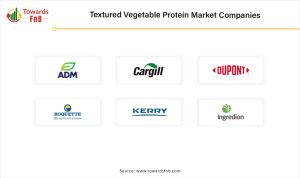
1. ADM (Archer Daniels Midland)
- Company overview: ADM is one of the world’s largest agricultural processors, with deep roots in soy, pea, and alternative proteins.
- Recent moves: ADM continues expanding its plant protein capacity, especially in North America and Europe, while investing heavily in texturization technologies.
- Competitive edge: Unmatched scale, vertically integrated sourcing, and global distribution make ADM a go-to supplier for multinational food brands.
- Future outlook: ADM will likely lead blended protein innovations that balance cost, texture, and nutrition across mass-market applications.
2. Cargill, Inc.
- Company overview: Cargill operates across food, agriculture, and nutrition, with TVP embedded in its broader protein strategy.
- Recent moves: The company has expanded alternative protein R&D hubs and strengthened partnerships with plant-based meat producers.
- Competitive edge: Cargill excels at cost optimization and supply security, two critical buyer priorities in 2025.
- Future outlook: Expect Cargill to push TVP deeper into foodservice and emerging markets where affordability drives adoption.
3. IFF Nutrition & Biosciences (formerly DuPont)
- Company overview: IFF blends ingredients, enzymes, cultures, and proteins into high-performance food solutions.
- Recent moves: The company focuses on improving texture, mouthfeel, and flavor masking in plant proteins.
- Competitive edge: Strong formulation expertise allows IFF to sell solutions—not just ingredients.
- Future outlook: IFF will remain influential in premium and functional TVP applications, especially nutrition and hybrid products.
4. Roquette Frères
- Company overview: Roquette is a global leader in plant-based ingredients, with a strong focus on pea protein.
- Recent moves: The company continues expanding pea protein capacity and developing clean-label TVP solutions.
- Competitive edge: Roquette’s pea-based TVP appeals to allergen-conscious and sustainability-focused brands.
- Future outlook:Roquette is well positioned to benefit as pea protein adoption accelerates globally.
5. Kerry Group
- Company overview: Kerry operates at the intersection of taste, nutrition, and functionality.
- Recent moves: Kerry has expanded its plant-based protein systems, integrating TVP with flavor and seasoning solutions.
- Competitive edge: Its ability to deliver complete sensory solutions sets it apart from commodity suppliers.
- Future outlook: Kerry will gain share in premium meat analogues and foodservice-driven innovation.
6. Ingredion Incorporated
- Company overview: Ingredion specializes in ingredient systems derived from corn, tapioca, peas, and pulses.
- Recent moves: The company continues investing in pulse-based proteins and texturization capabilities.
- Competitive edge: Strong formulation support and versatility across applications.
- Future outlook: Ingredion will expand TVP use beyond meat analogues into snacks and hybrid foods.
7. PURIS
- Company overview: PURIS is a US-based leader in yellow pea protein and plant-based ingredient innovation.
- Recent moves: PURIS has strengthened partnerships with plant-based brands and expanded domestic production.
- Competitive edge: Traceability, non-GMO positioning, and clean-label appeal.
- Future outlook: PURIS stands to benefit as North American buyers prioritize local, allergen-free proteins.
8. Beneo GmbH
- Company overview: Part of the Südzucker Group, Beneo focuses on functional plant-based ingredients.
- Recent moves: Beneo has increased focus on texturized wheat and pulse proteins for meat alternatives.
- Competitive edge: Strong science-backed nutrition positioning.
- Future outlook: Beneo will grow in functional nutrition and health-driven TVP applications.
9. Glanbia PLC
- Company overview: Glanbia operates across performance nutrition and functional ingredients.
- Recent moves: The company explores hybrid protein systems combining plant and dairy proteins.
- Competitive edge: Deep expertise in sports and nutritional applications.
- Future outlook: Glanbia will expand TVP use in supplements and high-protein foods.
10. Fuji Oil Holdings
- Company overview: Fuji Oil is a Japanese food ingredient leader with strong plant-based innovation.
- Recent moves: The company continues developing soy-based TVP tailored to Asian cuisines.
- Competitive edge: Regional expertise and application-specific innovation.
- Future outlook: Fuji Oil will play a key role in Asia Pacific’s rapid TVP growth.
Invest in Our Premium Strategic Solution: https://www.towardsfnb.com/checkout/5753
Why Competition Is Intensifying in 2025
Competition heats up because TVP is no longer experimental. Major food manufacturers now commit long-term volumes, which raises the stakes. At the same time, price pressure, raw material volatility, and buyer consolidation reward suppliers who can scale, innovate, and support customers end-to-end.
Add AI-driven formulation, data-led demand forecasting, and faster product cycles—and only well-capitalized, technically advanced players thrive.
What’s Next: 2025-2030 Outlook
Between 2025 and 2030, expect the TVP market to evolve in three major ways:
- Blended proteins will dominate, combining soy, pea, fava, and wheat for optimized cost and texture.
- Foodservice and HoReCa adoption will accelerate, especially in Asia and emerging markets.
- TVP will move beyond meat analogues, becoming a standard protein base in snacks, supplements, and hybrid foods.
Sustainability metrics, AI-assisted processing, and regional sourcing will separate leaders from laggards.
Final Takeaway
In 2025, textured vegetable protein is no longer just about replacing meat it’s about redefining how protein works at scale. Buyers should focus on partners who deliver reliability and performance. Investors should watch companies mastering pea protein and blended formulations. Industry leaders must innovate faster while protecting margins.
TVP’s next chapter isn’t about hype. It’s about execution and the companies that get it right will shape the global protein economy for the next decade.
Become a Valued Research Partner with Us – Schedule a meeting: https://www.towardsfnb.com/schedule-meeting
Feel Free to Get in Touch with Us for Orders or Any Questions at: sales@towardsfnb.com
Unlock expert insights, custom research, and premium support with the FnB Market Pulse Annual Membership. For USD 495/month (billed annually), get full access to exclusive F&B market data and personalized guidance. It’s your strategic edge in the food and beverage industry: https://www.towardsfnb.com/get-an-annual-membership
About Us
FnB Market Pulse is a global consulting firm specializing in the food and beverage industry, providing innovative solutions and expert guidance to elevate businesses. With an in-depth understanding of the dynamic F&B sector, we deliver customized market analysis and strategic insights. Our team of seasoned professionals is committed to empowering clients with the knowledge needed to make informed decisions, ensuring they stay ahead of market trends. Partner with us as we redefine success in the rapidly evolving food and beverage landscape, and together, we’ll navigate this transformative journey.
and more pressure to curate. For investors, the category offers stable growth with pockets of high-margin innovation. For leaders, the future belongs to those who modernize fast, understand flavor-driven emotions, and stay agile across retail and digital landscapes.