
The sustainable palm oil market enters 2025 at a critical inflection point. Valued at USD 78.7 billion in 2025, and projected to climb to USD 117.36 billion by 2034, the market is no longer driven by volume alone. With a steady CAGR of 4.54%, growth now hinges on how palm oil is produced, who produces it, and how transparently companies can prove sustainability across global supply chains.
Why does 2025 matter so much? Because this is the year sustainable palm oil moves from a “preferred option” to a baseline requirement. Regulators, multinational brands, and consumers are aligning around one message: palm oil must deliver high yield, low environmental impact, and social accountability simultaneously. Companies that fail to adapt risk exclusion from premium markets, especially in Europe and North America.
This shift reshapes procurement strategies, competitive positioning, and long-term investment decisions across food, cosmetics, biofuels, and consumer goods.
Key Takeaways for 2025
- The sustainable palm oil market reaches USD 78.7 billion, with Asia Pacific leading production and Europe accelerating fastest.
- Food & beverage dominates demand, while personal care & cosmetics grow the fastest.
- Crude palm oil remains dominant, but palm kernel oil gains momentum due to non-edible applications.
- B2B channels still lead, though B2C growth surges via e-commerce and direct sourcing.
- Sustainability certifications now influence deal-making, supplier access, and brand trust.
Want to Explore More? Get a Free Sample Report:
https://www.towardsfnb.com/download-sample/5818
The 2025 Buyer Playbook: What Really Drives Purchase Decisions
In 2025, palm oil buyers operate under intense scrutiny. Procurement teams now balance cost, certification, traceability, and reputational risk. Five factors define buying behavior:
1. Certification as Market Access
- RSPO, ISPO, and equivalent certifications are no longer optional. They determine whether suppliers can sell into Europe, work with global FMCG brands, or access premium pricing.
2. Yield Efficiency and Land Optimization
- Palm oil’s unmatched yield 3.5 tonnes per hectare versus 0.7 for sunflower oil keeps it strategically vital. Buyers favor producers who maximize output without expanding farmland.
3. End-Use Versatility
- Suppliers gain advantage when they serve food, cosmetics, detergents, and biofuels, reducing buyer dependency on multiple vendors.
4. Digital Traceability
- GIS mapping, satellite monitoring, AI-driven plantation management, and blockchain-backed records now shape supplier selection, especially for multinational buyers.
5. Long-Term Supply Security
- Climate volatility and regulatory pressure push buyers toward vertically integrated producers with diversified sourcing across regions.
In-Depth Company Profiles: The Market Leaders in 2025
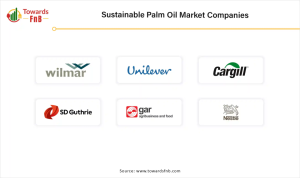
1.Wilmar International
- Overview: The world’s largest palm oil processor with extensive plantation, refining, and distribution operations.
- Recent Moves: Expanded traceability programs and zero-deforestation commitments.
- Competitive Edge: End-to-end control across the value chain.
- Future Outlook: Remains indispensable to global FMCG supply chains.
2. Unilever PLC
- Overview: One of the largest buyers of palm oil globally, consuming 6–8% of annual production.
- Recent Moves: Strengthened supplier accountability and deforestation-free sourcing targets.
- Competitive Edge: Purchasing power and sustainability leadership.
- Future Outlook: Continues shaping industry standards rather than merely following them.
3. Cargill, Inc.
- Overview: A global agribusiness giant with strong palm oil trading and processing capabilities.
- Recent Moves: Increased investment in satellite monitoring and supplier engagement.
- Competitive Edge: Logistics strength and risk management expertise.
- Future Outlook: Expands role as a trusted intermediary between growers and global brands.
4. SD Guthrie Bhd
- Overview: Formerly Sime Darby Plantation, a major Malaysian plantation operator.
- Recent Moves: Rebranding aligned with sustainability and circular economy goals.
- Competitive Edge: Large-scale plantation expertise with certified operations.
- Future Outlook: Focuses on operational efficiency and premium certified supply.
5. Golden Agri-Resources
- Overview: One of the largest palm oil plantation companies globally.
- Recent Moves: Strengthened RSPO compliance and smallholder inclusion programs.
- Competitive Edge: Scale combined with sustainability initiatives.
- Future Outlook: Maintains leadership in Asia while expanding certified exports.
6. Musim Mas
- Overview: A fully integrated palm oil company operating from plantations to consumer products.
- Recent Moves: Advanced zero-waste and circular economy initiatives.
- Competitive Edge: Vertical integration and cost efficiency.
- Future Outlook: Well-positioned as sustainability regulations tighten.
7. Nestlé Global
- Overview: A major end-user driving demand for certified sustainable palm oil.
- Recent Moves: Blockchain traceability pilots across key supply chains.
- Competitive Edge: Brand credibility and supplier influence.
- Future Outlook: Continues pushing upstream suppliers toward higher standards.
8. Louis Dreyfus Company
- Overview: A global commodities merchant with a strong palm oil trading footprint.
- Recent Moves: Enhanced responsible sourcing frameworks.
- Competitive Edge: Market intelligence and global reach.
- Future Outlook: Plays a critical role in balancing supply-demand volatility.
9. Barry Callebaut AG
- Overview: A leading chocolate manufacturer with high palm oil usage.
- Recent Moves: Tightened supplier sustainability audits.
- Competitive Edge: Strong ESG integration into sourcing.
- Future Outlook: Drives premium sustainable palm oil demand in confectionery.
10. Bunge Ltd.
- Overview: A global agribusiness player expanding sustainable oil portfolios.
- Recent Moves: Strengthened sustainability disclosures and supplier oversight.
- Competitive Edge: Financial strength and cross-commodity expertise.
- Future Outlook: Gains from growing demand for responsibly sourced vegetable oils.
Invest in Our Premium Strategic Solution: https://www.towardsfnb.com/checkout/5818
Why Competition is Intensifying
Competition intensifies as regulation, consumer activism, and investor scrutiny converge. Certified supply remains limited while demand grows rapidly, creating pricing power for compliant producers.
At the same time:
- Certification costs challenge smallholders.
- Technology investment becomes mandatory, not optional.
- ESG performance influences access to capital.
This environment favors large, transparent, tech-enabled players, while pushing the industry toward consolidation and partnerships.
What’s Next: 2025-2030 Outlook
Between 2025 and 2030, three forces redefine the market:
- Digital agriculture adoption accelerates, improving yields and compliance.
- Organic and low-impact farming grows fastest, though from a smaller base.
- Europe sets the regulatory pace, influencing global trade norms.
Asia Pacific remains the production backbone, while Europe becomes the sustainability rule-maker.
Future Outlook
- For buyers, sustainable palm oil in 2025 becomes a supply-chain necessity, not a branding exercise.
- For investors, it offers stable growth anchored in regulation and demand certainty.
- For industry leaders, the message is clear: scale alone no longer wins transparency, technology, and trust do.
As the market advances toward USD 117.36 billion by 2034, sustainable palm oil stands as one of the clearest examples of how profitability and responsibility now move forward together.
Become a Valued Research Partner with Us – Schedule a meeting: https://www.towardsfnb.com/schedule-meeting
Feel Free to Get in Touch with Us for Orders or Any Questions at: sales@towardsfnb.com
Unlock expert insights, custom research, and premium support with the FnB Market Pulse Annual Membership. For USD 495/month (billed annually), get full access to exclusive F&B market data and personalized guidance. It’s your strategic edge in the food and beverage industry: https://www.towardsfnb.com/get-an-annual-membership
About Us
FnB Market Pulse is a global consulting firm specializing in the food and beverage industry, providing innovative solutions and expert guidance to elevate businesses. With an in-depth understanding of the dynamic F&B sector, we deliver customized market analysis and strategic insights. Our team of seasoned professionals is committed to empowering clients with the knowledge needed to make informed decisions, ensuring they stay ahead of market trends. Partner with us as we redefine success in the rapidly evolving food and beverage landscape, and together, we’ll navigate this transformative journey.
and more pressure to curate. For investors, the category offers stable growth with pockets of high-margin innovation. For leaders, the future belongs to those who modernize fast, understand flavor-driven emotions, and stay agile across retail and digital landscapes.