
The global plant-based food market stood at USD 50.15 billion in 2024 and is set to rise from USD 56.37 billion in 2025 to about USD 161.41 billion by 2034, compounding at 12.4% (2025–2034). Why does 2025 matter? Because this is the year the category shifts from “alternative” to mainstream choice, powered by better taste/texture tech, sharper price points, and a consumer push for healthier, lower-impact diets. Asia Pacific already leads on share (2024), North America is revving up on growth, and dairy alternatives remain the on-ramp for mass adoption.
Key Takeaways for 2025
- Momentum is real: Market climbs to USD 56.37B in 2025, on track for USD 161.41B by 2034 at 12.4% CAGR.
- APAC leads, NA accelerates: Asia Pacific dominates 2024 revenue; North America scales fastest through 2034 on investment, distribution, and food-service adoption.
- Dairy alternatives = gateway: Milks, yogurts, and creamers anchor category penetration; egg substitutes sprint on protein-rich positioning.
- Soy rules today; peas surge next: Soy led 2024 share; pea accelerates on sustainability, allergen-light narratives, and versatile functionality.
- Direct-to-consumer drives trial; B2B fuels scale: B2C led 2024, while B2B expands fastest as retailers, QSRs, and manufacturers embed plant-based SKUs.
Want to Explore More? Get a Free Sample Report:
https://www.towardsfnb.com/download-sample/5637
The 2025 Buyer Playbook (What Really Drives Decisions and Deals)
- Taste first, then values. Consumers buy flavor and habit, not lectures. Winning brands deliver craveable, familiar formats (milks, burgers, nuggets, yogurts) and then reinforce with clean labels, lower carbon, and animal-welfare benefits.
- Protein credibility. Clear protein per serving, complete amino acid profiles (via blends), and fortification (B12, calcium, omega-3s, iron) de-risk nutrient-gap perceptions especially for families, athletes, and active adults.
- Price parity & pack strategy. Smart pack sizes, value bundles, and private-label collaborations reduce the “plant-based premium.” Subscription and multipacks help normalize weekly basket adds.
- Channel convenience. Omnichannel presence is non-negotiable: supermarkets for discoverability, QSR/food-service for trial in comfort foods, and online for depth of assortment and education.
- Trust through proof. Certifications (non-GMO, organic), transparent sourcing, and digestible science around ingredients (soy, pea, oats, mycelium, fermentation-derived components) build confidence.
- Culinary cues. Co-created recipes with chefs and creators move plant-based from “replacement” to culinary inspiration important for repeat rates.
In-Depth Company Profiles: The Market Leaders in 2025
Each profile covers: Overview, Recent Moves, Competitive Edge, Future Outlook.
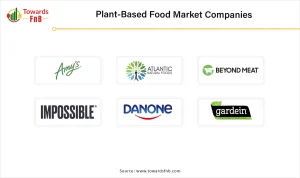
1) Beyond Meat, Inc.
- Overview: A category catalyst in plant-based meats, best known for burgers, sausages, and crumbles across retail and food-service.
- Recent Moves: Reformulations to improve protein density and reduce sodium/fats, expanded value packs, and selective QSR pilots.
- Competitive Edge: Brand recognition, wide distribution, and ongoing texture R&D in extrusion and binding systems.
- Future Outlook: Expect a push into leaner, cleaner labels, price-point engineering, and food-service wins that reframe taste perceptions at scale.
2) Impossible Foods, Inc.
- Overview: Innovation-forward meat-alternative company with strong food-service and retail presence (burgers, grounds, nuggets).
- Recent Moves: Faster iteration cycles, kids-friendly SKUs, and menu partnerships.
- Competitive Edge: Proprietary flavor chemistry and heme-style flavor systems, supported by aggressive sensory testing.
- Future Outlook: Broader form factor expansion (meatballs, sliced, deli), higher-protein lines, and new categories beyond red meat analogs.
3) Danone S.A.
- Overview: Global leader in dairy and plant-based (Alpro, Silk), plus specialized nutrition.
- Recent Moves: New dairy-alternative yogurts and creamers, sugar reduction, and region-specific launches; investment in protein-rich SKUs.
- Competitive Edge: Dominance in dairy-alt, cold-chain execution, and nutrition science; strong APAC and EU retail relationships.
- Future Outlook: Plant-based yogurt and beverage leadership deepens; expect more fortified formats targeting gut health, immunity, and active-aging needs.
4) Nestlé S.A.
- Overview: The world’s largest F&B company with a growing roster of plant-based meals, creamers, and meat alternatives.
- Recent Moves: Market-tailored innovations (e.g., plant-based mixes and meals), and food-service collaborations; continued push in Latin America and Europe.
- Competitive Edge: Unmatched R&D scale, culinary brands (Maggi, Garden Gourmet), and route-to-market muscle.
- Future Outlook: Expect Nestlé to blend plant + conventional in hybrid SKUs for affordability and nutrition, while scaling pure-plant in core markets.
5) Tyson Foods, Inc.
- Overview: Protein giant playing across animal and plant-based lines; pragmatic approach to consumer demand.
- Recent Moves: Portfolio rationalization and selective plant-based launches focusing on food-service formats where Tyson excels.
- Competitive Edge: Food-service dominance, manufacturing scale, and co-manufacturing networks that can rapidly shift mix.
- Future Outlook: Tyson will emphasize hybrid and plant-forward solutions for institutional clients (schools, healthcare, corporate dining) to meet nutrition and sustainability mandates.
6) Lightlife Foods, Inc. (Maple Leaf Foods)
- Overview: North American pioneer in plant-based meats (burgers, dogs, tempeh) with a cleaner-label ethos.
- Recent Moves: Label simplification, improved bite/juiciness, and partnerships with retailers for value pricing.
- Competitive Edge: Tempeh heritage and ingredient-simplicity story that resonates with label-readers.
- Future Outlook: Growth in everyday, budget-friendly SKUs and family-size packs; potential leadership in minimally processed formats as consumers seek “less-engineered” options.
7) Garden Protein International (Gardein)
- Overview: Conagra’s powerhouse brand in frozen plant-based meals and proteins across nuggets, tenders, and entrées.
- Recent Moves: New chef-crafted flavors, improved breading systems, and bundle pricing in freezer aisles.
- Competitive Edge: Frozen convenience meets comfort food—an adoption path for flexitarians.
- Future Outlook: Expanded multi-serve entrées and air-fryer-perfect formats; broader presence in club stores and value channels.
8) Amy’s Kitchen, Inc.
- Overview: Organic pioneer with a deep bench in vegetarian/vegan ready meals, soups, and burritos.
- Recent Moves: Capacity investments, refreshed packaging, and better gluten-free/soy-free options.
- Competitive Edge: Organic + comfort credentials and loyal household penetration; trusted by families.
- Future Outlook: More clean-label plant-based meals tailored to dietary needs (low-sodium, high-protein), plus omni-channel DTC bundles.
9) Atlantic Natural Foods, LLC
- Overview: Shelf-stable plant proteins (TUNO, Loma Linda) and pantry-friendly meals—key for affordability and access.
- Recent Moves: Expanded global distribution and flavors aligned with local cuisines; nutrition upgrades.
- Competitive Edge: Ambient (shelf-stable) know-how lowers cost and waste, unlocking emerging markets and institutional feeding.
- Future Outlook: Growth via B2B food-service and value retail; co-packing for private label likely.
10) VBites Food Ltd.
- Overview: UK-based innovator offering a wide range of plant-based meats and fish alternatives with a culinary-led approach.
- Recent Moves: Portfolio streamlining, manufacturing optimization, and retailer ties in Europe.
- Competitive Edge: Breadth of SKUs across meat and seafood analogs, plus European recipe sensibilities.
- Future Outlook: Expect partnerships with premium retail and food-service that prize culinary authenticity and clean ingredient decks.
Invest in Our Premium Strategic Solution: https://www.towardsfnb.com/checkout/5637
Why Competition Is Intensifying
- Taste parity is here. With new extrusion, binding, and precision-fermentation inputs, many products now meet or beat animal comparators on flavor, aroma, and mouthfeel inviting more entrants and private labels.
- Price pressure rises. As volumes scale and commodity dynamics improve, brands face value-tier competition. Retailers will promote private label and high-velocity SKUs, squeezing weaker mid-tier portfolios.
- B2B is the new battleground. Schools, healthcare, corporate dining, and QSRs are adding plant-based solutions for sustainability goals. Large protein/CPG players (Nestlé, Danone, Tyson, Conagra/Gardein) hold channel advantages intensifying competition for menu slots.
- Nutrient narrative wars. Expect sharper claims on complete protein, bioavailability, and fortification (B12, iron, calcium, omega-3s). Brands must show data, not just ideals.
- Regulatory and labeling scrutiny. As adoption grows, so does oversight on naming, health claims, and allergen labeling. Companies with strong QA/regulatory teams will out-execute others.
- Regional localization. APAC leads in share; its cuisines and price points demand different formats than Western markets. Local champions and multinationals will scrap for culturally tuned SKUs.
What’s Next (2025-2030 Outlook)
- From dairy-alt to category constellation. Dairy alternatives keep leading, but fastest growth shifts to egg substitutes, center-of-plate meats, ready meals, and better-for-you snacking all riding protein and convenience trends.
- Ingredient diversification. Soy remains foundational, but pea, fava, oat, wheat, and rice gain ground. Expect blended proteins for complete amino acid profiles and improved functionality. Fermentation-derived fats and flavors will sharpen sensory fidelity.
- Nutrition by design. Fortification becomes table stakes. Brands will pair protein + micronutrients + fiber to address immunity, gut health, and active aging supported by concise, credible science on pack.
- Price normalization. Cost curves bend down via scale, new processing tech, and supply-chain optimization. Club, value retail, and private label expand category access.
- Food-service flywheel. Menu placements drive trials and weekly habits. Expect institutional mandates (schools, hospitals, public procurement) to carve out a set percentage for plant-based options.
- Sustainability as a filter, not a feature. Carbon, water, and land-use benefits won’t sell a bad burger but they will tip decisions between products of comparable taste and price. Brands will publish cradle-to-shelf footprints.
- M&A and partnerships. Ingredient houses and big CPG will consolidate promising mid-tier brands. Co-manufacturing and hybrid development (plant + cultivated/fermented components) accelerate innovation while managing capex.
Future Outlook
2025 is the year plant-based stops auditioning and starts headlining. The market’s leap from USD 56.37B in 2025 toward USD 161.41B by 2034 won’t be driven by novelty it will be won by weeknight reliability: better taste, smart pricing, and nutrition that earns trust. For buyers, this means curating sets that move volume today while seeding next-gen categories. For investors, it’s time to back platforms with real operating leverage and B2B reach. And for industry leaders, the mandate is clear: execute on taste, deliver value, and prove the nutrition. Do that consistently, and you won’t just ride the plant-based wave you’ll shape the menu for the next decade.
Become a Valued Research Partner with Us – Schedule a meeting: https://www.towardsfnb.com/schedule-meeting
Feel Free to Get in Touch with Us for Orders or Any Questions at: sales@towardsfnb.com
Unlock expert insights, custom research, and premium support with the FnB Market Pulse Annual Membership. For USD 495/month (billed annually), get full access to exclusive F&B market data and personalized guidance. It’s your strategic edge in the food and beverage industry: https://www.towardsfnb.com/get-an-annual-membership
About Us
FnB Market Pulse is a global consulting firm specializing in the food and beverage industry, providing innovative solutions and expert guidance to elevate businesses. With an in-depth understanding of the dynamic F&B sector, we deliver customized market analysis and strategic insights. Our team of seasoned professionals is committed to empowering clients with the knowledge needed to make informed decisions, ensuring they stay ahead of market trends. Partner with us as we redefine success in the rapidly evolving food and beverage landscape, and together, we’ll navigate this transformative journey.