
The global maltodextrin market is gearing up for one of its most pivotal years yet. Valued at USD 5.24 billion in 2025 and on track to nearly double to USD 10.40 billion by 2034, the industry is evolving faster than ever fueled by clean-label reformulations, nutraceutical expansion, rising demand for functional foods, and a new era of ingredient innovation.
But 2025 isn’t just another year of growth. It’s the year maltodextrin shifts from being a “quiet ingredient” behind the scenes to a strategic asset shaping product development across food, beverages, sports nutrition, pharmaceuticals, and personal care. Companies that once focused on cost alone are now reframing maltodextrin as a tool for texture optimization, calorie control, label simplification, and functional performance.
This is the year brands re-evaluate their suppliers, re-architect their formulations, and accelerate adoption of specialty maltodextrin variants especially clean-label, tapioca-based, and high-DE formulations.
Key Takeaways for 2025
- Asia Pacific leads with 39% of global share, driven by massive food ecosystem expansion and strong investment in food safety.
- Corn-based maltodextrin remains dominant (63%), but tapioca-based variants show the fastest momentum due to allergen-free and clean-label positioning.
- Spray-dried powder rules the market (68%), while agglomerated powders gain traction for premium and instantized applications.
- Medium DE maltodextrins (5-15 DE) hold a 51% share, thanks to ideal solubility, viscosity control, and thermal stability.
- Nutraceuticals and dietary supplements are the fastest-growing application segment, powered by demand for clean energy systems and functional wellness products.
Want to Explore More? Get a Free Sample Report:
https://www.towardsfnb.com/download-sample/5693
The 2025 Buyer Playbook: What Really Drives Deals
Buyers in 2025 behave differently they’re strategic, informed, and under pressure to deliver rapid product innovation without compromising safety or cost.
Here’s what’s shaping purchase decisions this year:
1. Clean Label and Functional Performance Must Coexist
Manufacturers want neutral-tasting bulking agents but not at the expense of label transparency. Buyers prefer suppliers that can support natural, non-GMO, gluten-free, allergen-free claims, especially for beverages, sports nutrition, and kids’ products.
2. Supply Chain Security Beats Low Price
Given climate-related supply instability and geopolitical shipping disruptions, procurement teams care more about consistent availability than bargain pricing. Multi-origin sourcing and regional processing facilities are big selling points.
3. Customization Is the New Competitive Currency
Brands increasingly demand personalized DE ranges, solubility profiles, and encapsulation properties to differentiate their food or nutraceutical products. Suppliers offering formulation partnership win more business.
4. Sustainability Scorecards Influence Contracts
From regenerative agriculture to emissions transparency, sustainability is no longer a side narrative it’s a selection filter for major F&B players.
5. Regulatory Readiness Creates Buyer Confidence
With regional policies tightening especially around food safety in Asia and Latin America buyers choose suppliers who offer compliance support, documentation, and testing data.
In-Depth Company Profiles: The Market Leaders in 2025
Below is a market-rich breakdown of the leading maltodextrin companies, their strategies, and where they are headed next.
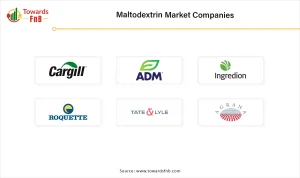
1. Cargill, Incorporated
- Overview: Cargill remains one of the world’s largest food ingredient suppliers, leveraging its global supply chain, broad starch portfolio, and deep customer relationships.
- Recent Moves: Cargill is increasingly investing in specialty carbohydrates and clean-label starches, ensuring they stay ahead of consumer-driven reformulations.
- Competitive Edge: Their vertically integrated supply chain limits disruptions—a major advantage in a market sensitive to raw material volatility.
- Future Outlook: Expect Cargill to scale sustainability commitments and double down on plant-based ingredient lines to strengthen ties with global CPG manufacturers.
2. Archer Daniels Midland (ADM)
- Overview: ADM brings unmatched agricultural processing strength and strong distribution networks.
- Recent Moves: The company continues expanding into functional wellness ingredients and advanced carbohydrate derivatives.
- Competitive Edge: ADM’s research capabilities allow it to engineer DE-specific maltodextrins that meet niche application needs.
- Future Outlook: As ADM shifts deeper into health-forward ingredient categories, it will likely enhance its maltodextrin portfolio with cleaner and more soluble variants.
3. Ingredion Incorporated
- Overview: A major force in specialty starches, Ingredion actively leads in clean label formulation innovation.
- Recent Moves: February 2024 and September 2024 saw multiple new launches, including NOVATION® Indulge 2940 and citrus fiber solutions like FIBERTEX CF 500 and CF 100.
- Competitive Edge: Ingredion combines science-backed innovation with rapid commercialization a rare strength in the starch world.
- Future Outlook: Expect expansion in Asia-Pacific and a stronger push into alternative starch sources like tapioca and rice.
4. Roquette Frères
- Overview: Roquette is a global leader in plant-based ingredients, including pea protein and starch derivatives.
- Recent Moves: They’ve expanded investments in sustainable sourcing and bio-based materials.
- Competitive Edge: Roquette excels in high-performance maltodextrins used in pharmaceuticals and nutraceuticals segments gaining speed in 2025.
- Future Outlook: They’ll likely become one of the top partners for companies targeting premium, functional, and clean label products.
5. Tate & Lyle PLC
- Overview: Long known for sweeteners and texture innovations, Tate & Lyle continues to reinvent its ingredients platform.
- Recent Moves: In November 2024, they introduced EUOLIGO FOS (a non-GMO dietary fiber) and TASTEVA M, strengthening their health-forward positioning.
- Competitive Edge: The company’s innovation engine is extremely fast, making them a preferred partner for brands seeking quick-to-market prototypes.
- Future Outlook: Expect more microbiome-focused ingredient solutions, complemented by upgraded maltodextrin formulations.
6. AGRANA Beteiligungs-AG
- Overview: AGRANA serves the global market with a balanced portfolio of sugar, fruit, and starch ingredients.
- Recent Moves: They’ve been scaling capacity in Europe and optimizing processing technologies.
- Competitive Edge: Their geographic flexibility and diversified raw material network help them remain resilient in turbulent supply conditions.
- Future Outlook: AGRANA’s expansion into bio-based solutions suggests maltodextrin innovation will increasingly intersect with natural and circular economy trends.
7. Tereos Group
- Overview: A major European agribusiness with deep roots in sugar and starch production.
- Recent Moves: Tereos has been reorganizing and strengthening operations to improve efficiency and sustainability.
- Competitive Edge: They are known for reliability and large-scale production, making them a staple supplier for global F&B giants.
- Future Outlook: Expect Tereos to introduce more specialty starch derivatives tailored to functional foods.
8. Grain Processing Corporation (GPC)
- Overview:
GPC is well regarded for its high-purity maltodextrins and technical starches. - Recent Moves:
They’ve enhanced their nutraceutical and pharmaceutical ingredient line. - Competitive Edge:
GPC excels in functionality high solubility, neutral flavor, and consistency. - Future Outlook:
They’ll likely invest in more pharmaceutical-grade solutions, capitalizing on steady demand.
9. Avebe U.A.
- Overview: A pioneer in potato-based ingredients, Avebe leads in allergen-free and plant-based starch solutions.
- Competitive Edge: Their potato-based maltodextrins appeal to the growing gluten-free and non-GMO segments.
- Future Outlook: Expect deeper moves in clean label starches tied to plant-based dairy alternatives.
Invest in Our Premium Strategic Solution: https://www.towardsfnb.com/checkout/5693
Why Competition Is Intensifying
Several forces are amplifying competitive pressure:
1. Clean Label Reformulations
Brands need ingredients that perform without synthetic additives, pushing suppliers to innovate faster.
2. Regional Food Safety Regulations
Asia Pacific and Latin America are raising the bar, rewarding suppliers with robust compliance capabilities.
3. Sustainability Demands
Customers want carbon-labeled products and transparent sourcing—something not every supplier can deliver.
4. Sports Nutrition and Functional Foods Boom
High-margin categories attract more players into maltodextrin derivatives and alternatives.
5. Raw Material Volatility
Climate impacts on corn, wheat, and cassava push suppliers to diversify, affecting margins and competitive dynamics.
What’s Next: 2025-2030 Outlook
The maltodextrin market will evolve dramatically over the next five years:
1. Shift Toward Alternative Starches
Tapioca, rice, and potato-based maltodextrins will rise, driven by allergen-free and non-GMO demand.
2. High-DE and Custom Functionality Growth
Brands will increasingly seek performance-specific maltodextrins for texture, encapsulation, and solubility.
3. Stronger Role in Clean Label and Wellness Products
Expect more “lightly processed,” organic, and plant-derived maltodextrin innovations.
4. Pharma and Medical Nutrition Expansion
Aging populations and personalized nutrition will fuel demand for high-purity maltodextrins.
5. Regional Manufacturing Spread
Companies will build or expand plants in Asia-Pacific and Latin America to hedge against shipping risk.
Final Takeaway
The maltodextrin market in 2025 is no longer just about supplying a carbohydrate powder—it’s about enabling the next generation of functional foods, nutraceuticals, clean-label beverages, pharmaceuticals, and sustainable products. For buyers, this year demands strategic partnerships with reliable and innovative suppliers. For investors, the industry promises stable growth with breakout opportunities in clean-label and alternative starch segments. For industry leaders, the race now hinges on innovation, transparency, and global supply chain resilience.
2025 is just the beginning. The companies that move now will shape the future of this USD 10.40 billion market.
Become a Valued Research Partner with Us – Schedule a meeting: https://www.towardsfnb.com/schedule-meeting
Feel Free to Get in Touch with Us for Orders or Any Questions at: sales@towardsfnb.com
Unlock expert insights, custom research, and premium support with the FnB Market Pulse Annual Membership. For USD 495/month (billed annually), get full access to exclusive F&B market data and personalized guidance. It’s your strategic edge in the food and beverage industry: https://www.towardsfnb.com/get-an-annual-membership
About Us
FnB Market Pulse is a global consulting firm specializing in the food and beverage industry, providing innovative solutions and expert guidance to elevate businesses. With an in-depth understanding of the dynamic F&B sector, we deliver customized market analysis and strategic insights. Our team of seasoned professionals is committed to empowering clients with the knowledge needed to make informed decisions, ensuring they stay ahead of market trends. Partner with us as we redefine success in the rapidly evolving food and beverage landscape, and together, we’ll navigate this transformative journey.