
The global Hispanic foods market is experiencing rapid expansion. From a market size of USD 36.52 billion in 2024, it is expected to rise significantly, reaching USD 38.75 billion in 2025 and potentially surpassing USD 66 billion by 2034, growing at a compound annual growth rate (CAGR) of 6.10%. The growing demand for authentic ethnic cuisines, driven by cultural exploration and changing consumer preferences, is propelling this growth, making 2025 a pivotal year for the industry.
In this article, we explore the key factors driving this market’s evolution, the major trends shaping consumer behavior, and the competitive dynamics that are expected to define the landscape until 2034.
Key Takeaways for 2025
- Market Expansion: The Hispanic foods market is on track to witness steady growth, driven by increasing consumer demand for authentic and flavorful ethnic cuisines.
- Rising Popularity of Salsa and Tortillas: Tortillas and salsa will continue to dominate, with salsa witnessing the fastest growth rate due to its versatility and health benefits.
- Vegetarian Trend: While non-vegetarian Hispanic foods still dominate, the vegetarian segment is growing at a significant pace, reflecting the rise of plant-based diets.
- Online Shopping Surge: Online retail will be the fastest-growing distribution channel as e-commerce platforms continue to expand their presence globally.
- North America and Asia-Pacific Growth: North America remains the largest market, but Asia-Pacific is expected to grow rapidly due to urbanization, a growing middle class, and an increasing demand for ethnic foods.
Want to Explore More? Get a Free Sample Report:
https://www.towardsfnb.com/download-sample/5661
The 2025 Buyer Playbook: What Drives Purchases in the Hispanic Foods Market?
In 2025, the primary drivers for Hispanic food purchases can be categorized into health-consciousness, authenticity, and convenience. Consumers increasingly seek flavorful, traditional Hispanic dishes that provide both nutritional value and a taste of cultural heritage. The rise in popularity of plant-based diets and the growing awareness around health issues like obesity and cardiovascular disease further emphasize the demand for nutritious, lower-calorie ethnic foods.
The convenience factor also plays a crucial role, especially with the increasing number of busy consumers looking for ready-to-eat options that can be conveniently purchased via online stores or supermarkets. Additionally, consumers are drawn to food products that are natural, clean-label, and free from preservatives, making authenticity a key component in the success of brands in this sector.
In-Depth Company Profiles: The Market Leaders in 2025
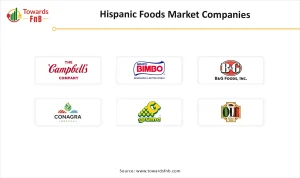
1. The Campbell’s Company (U.S.)
- Overview: Known for its extensive portfolio of soups, sauces, and snacks, Campbell’s has made significant inroads into the Hispanic foods market with its ready-to-eat products and sauces.
- Recent Moves: Campbell’s has expanded its offerings of ethnic cuisines in the U.S., with a focus on Mexican-inspired products.
- Competitive Edge: The brand’s reputation for quality and innovation, combined with its vast distribution network, positions it as a strong player in both the retail and restaurant sectors.
- Future Outlook: Campbell’s is likely to continue growing in the Hispanic foods sector through strategic partnerships and new product innovations targeting the growing demand for authentic ethnic flavors.
2. Grupo Bimbo (Mexico)
- Overview: As one of the largest Mexican food manufacturers, Grupo Bimbo has a strong presence in the Hispanic foods market, offering products such as tortillas, bread, and baked goods.
- Recent Moves: Grupo Bimbo has been expanding its market reach through acquisitions, such as its purchase of the U.S.-based bread manufacturer Sara Lee.
- Competitive Edge: The company’s massive production capabilities and extensive distribution channels across North America and Latin America give it a significant competitive edge.
- Future Outlook: With a focus on increasing consumer demand for organic and healthy products, Grupo Bimbo is set to continue innovating in healthier bread and tortilla options.
3. AmigoFoods (U.S.)
- Overview: A key player in the U.S. Hispanic food market, AmigoFoods focuses on authentic Mexican food products, including salsas, sauces, and tortillas.
- Recent Moves: The company has bolstered its product lineup with new items catering to vegan and gluten-free dietary preferences.
- Competitive Edge: AmigoFoods thrives on its ability to provide high-quality, authentic Mexican products with clean labels and no preservatives.
- Future Outlook: As plant-based diets continue to grow, AmigoFoods will likely tap into this trend by expanding its offerings of vegan and gluten-free Hispanic food products.
4. B and G Foods (U.S.)
- Overview: This U.S.-based food manufacturer owns several Hispanic food brands, including Ortega, a major brand in the salsa and tortilla markets.
- Recent Moves: B and G Foods has enhanced its distribution channels, both through brick-and-mortar stores and digital platforms.
- Competitive Edge: The company benefits from its strong brand equity in the Hispanic foods sector, along with a broad retail presence in the U.S.
- Future Outlook: B and G Foods will likely continue to expand through innovations in ethnic seasoning blends, catering to both Hispanic and non-Hispanic consumers.
5. ConAgra Brands (U.S.)
- Overview: ConAgra produces a variety of food products, including some notable brands in the Hispanic food segment like Marie Callender’s and Hunt’s.
- Recent Moves: ConAgra has been enhancing its ethnic food portfolio to include more authentic Mexican and Latin-inspired products.
- Competitive Edge: With a diversified product offering and a strong retail distribution network, ConAgra can capitalize on the growing demand for Hispanic cuisine.
- Future Outlook: The company’s emphasis on authentic flavors and convenience-driven product lines positions it well for future growth in the Hispanic foods market.
6. Yum Brands (U.S.)
- Overview: Owner of Taco Bell, Yum Brands has a massive presence in the Hispanic fast food market.
- Recent Moves: The company has expanded its Mexican-inspired menu to include healthier options and globally diverse flavor profiles.
- Competitive Edge: Its established global footprint and deep understanding of fast-casual dining trends in the Hispanic food sector provide a strong competitive advantage.
- Future Outlook: With its ongoing expansion into international markets, Yum Brands is set to capture more of the fast-casual Hispanic food market, especially in Asia-Pacific.
7. Gruma (Mexico)
- Overview: Gruma is one of the world’s largest producers of tortillas and corn flour, essential staples in Hispanic cuisine.
- Recent Moves: Gruma has been investing in the development of healthier, organic tortillas and expanding its international presence.
- Competitive Edge: Gruma’s vertical integration, from corn milling to tortilla production, enables it to control quality and cost, maintaining leadership in the market.
- Future Outlook: Gruma is well-positioned for growth, especially as it expands its range of organic and gluten-free tortilla options.
8. Olé Mexican Foods (U.S.)
- Overview: Olé Mexican Foods offers a variety of authentic tortillas, wraps, and related products.
- Recent Moves: Olé has been diversifying its product portfolio, including low-calorie and gluten-free options for health-conscious consumers.
- Competitive Edge: The brand’s commitment to using authentic ingredients and its dedication to providing healthier alternatives gives it an edge in the market.
- Future Outlook: With the growing preference for plant-based and low-carb diets, Olé Mexican Foods is likely to continue innovating with new healthy Hispanic food options.
9. Juanita’s Foods (U.S.)
- Overview: Specializing in traditional Mexican foods such as soups, salsas, and tortillas, Juanita’s Foods is known for its authentic, flavorful products.
- Recent Moves: The company has introduced a line of low-sodium and preservative-free products to cater to health-conscious consumers.
- Competitive Edge: Juanita’s Foods benefits from its strong emphasis on authenticity, using recipes passed down through generations.
- Future Outlook: As demand for organic and healthier options increases, Juanita’s Foods is expected to expand its product line to include more health-conscious options.
10. Bachoco (Mexico)
- Overview: Bachoco is a major player in the meat and poultry sector but also plays a significant role in the Hispanic food market, offering a wide range of meats used in traditional dishes like tacos and tamales.
- Recent Moves: Bachoco has expanded its reach in North America and Latin America, ensuring a steady supply of high-quality meats for Hispanic dishes.
- Competitive Edge: Bachoco’s strong position in the meat supply chain, combined with its focus on high-quality, sustainably sourced products, strengthens its position in the Hispanic foods market.
- Future Outlook: With increasing demand for protein-rich Hispanic dishes, Bachoco is poised for continued success in the meat-based segment.
Invest in Our Premium Strategic Solution: https://www.towardsfnb.com/checkout/5661
Why Competition Is Intensifying in the Hispanic Foods Market
The competition within the Hispanic foods market is becoming more intense due to several factors. First, the growing interest in authentic ethnic foods has attracted both global and local players. As new entrants rush to capitalize on this demand, established companies are focusing on product differentiation, sustainability, and health-conscious formulations to maintain market share.
Additionally, the rise of e-commerce platforms is creating new opportunities for brands to reach global consumers, intensifying competition even further. Online retailers can now provide consumers with easy access to authentic Hispanic ingredients and ready-to-eat meals, putting pressure on traditional retail channels like supermarkets and hypermarkets.
What’s Next (2025-2030 Outlook)
The Hispanic foods market is expected to continue growing, with new innovations in plant-based, organic, and health-conscious food options driving the market forward. The vegetarian and vegan trends will continue to gain traction as more Hispanic dishes are adapted to cater to plant-based diets. Additionally, the rise of e-commerce will make it easier for consumers to access authentic ethnic foods, further propelling growth.
Future Outlook
For industry leaders, investors, and buyers, the Hispanic foods market presents numerous opportunities as consumer demand for authentic, healthy, and convenient ethnic cuisines grows. As the market evolves, focusing on innovation, sustainability, and digital expansion will be key to remaining competitive and capturing the attention of increasingly health-conscious and diverse consumers.
With growth expected across multiple regions and segments, 2025 marks a crucial year for players aiming to make their mark in this fast-growing market.
Become a Valued Research Partner with Us – Schedule a meeting: https://www.towardsfnb.com/schedule-meeting
Feel Free to Get in Touch with Us for Orders or Any Questions at: sales@towardsfnb.com
Unlock expert insights, custom research, and premium support with the FnB Market Pulse Annual Membership. For USD 495/month (billed annually), get full access to exclusive F&B market data and personalized guidance. It’s your strategic edge in the food and beverage industry: https://www.towardsfnb.com/get-an-annual-membership
About Us
FnB Market Pulse is a global consulting firm specializing in the food and beverage industry, providing innovative solutions and expert guidance to elevate businesses. With an in-depth understanding of the dynamic F&B sector, we deliver customized market analysis and strategic insights. Our team of seasoned professionals is committed to empowering clients with the knowledge needed to make informed decisions, ensuring they stay ahead of market trends. Partner with us as we redefine success in the rapidly evolving food and beverage landscape, and together, we’ll navigate this transformative journey.