
The global fresh produce market entered 2025 with real weight behind it. After reaching USD 3,537 billion in 2024, the category is set to grow from USD 3,707 billion in 2025 to USD 5,653 billion by 2034, at a steady 4.80% CAGR (2025–2034). That’s not just incremental growth it’s a structural shift driven by healthier eating, rapid adoption of online grocery, and smarter, more transparent supply chains.
Why does 2025 matter? Three reasons. First, retailers and brands are standardizing the tech stack traceability, freshness sensors, and predictive logistics so “fresh” is verifiable, not just promised. Second, consumers are trading up to organic and clean-label options even as they demand greater convenience (think ready-to-eat and ready-to-cook). Third, policy and partnerships are aligning from Canada’s local food investment to Indo-Dutch greenhouse initiatives pushing best practices from pilots to scale. In short: 2025 is the year fresh produce becomes data-driven, e-commerce friendly, and consumer-led.
Key Takeaways for 2025
- North America leads today, but Asia Pacific is the growth engine through 2034.
- Dairy dominates within fresh categories in 2024; fruits & vegetables post the fastest momentum as consumers chase nutrient density and convenience.
- Supermarkets/hypermarkets still rule distribution, while online grocery is the fastest riser, powered by subscriptions, rapid delivery, and better cold chains.
- Transparency tech (QR codes, smart labels) and intelligent packaging move from novelty to table stakes.
- Local systems + global platforms: regional sourcing meets cross-border e-commerce, widening choice and competition.
Want to Explore More? Get a Free Sample Report:
https://www.towardsfnb.com/download-sample/5507
The 2025 Buyer Playbook: What Actually Closes the Sale
- Freshness you can prove. In 2025, purchase decisions hinge on verifiable freshness, not just shelf appeal. Brands that surface harvest dates, storage histories, and “eat by” guidance on-pack (via QR) convert better especially online.
- Clean, ethical, and local without sacrificing choice. Consumers want the story: origin, farmer, water use, and pesticide profile. Retailers that blend local heroes with global seasonal variety see higher basket values.
- Ready-to-eat convenience. Prepped salads, cut fruit, marinated veg, and chef-crafted kits win weekday missions. Buyers reward consistent texture, flavor, and reliable cold-chain integrity.
- Organic and residue-light claims with receipts. Certifications and residue testing matter. Buyers compare SKUs on standards (USDA Organic, EU Organic, India’s Jaivik Bharat, etc.) and reward brands that publish test results.
- Digital discovery. Shoppers increasingly meet new produce online. Social, recipe creators, and retailer apps spark trial (and subscriptions). Retail media that pairs shoppable recipes with dynamic promos drives repeat.
- Price-value clarity. Inflation fatigue is real. The winning message: “premium where it counts” (safety, nutrition, shelf life) and “value where it’s possible” (smart packs, waste-cutting formats).
In-Depth Company Profiles: The Market Leaders in 2025
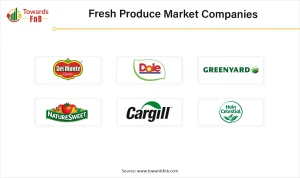
1. Dole plc / Dole Food Company, Inc.
- Overview: A global heavyweight in fresh fruits and vegetables with deep farm-to-retail integration.
- Recent Moves: Ongoing portfolio optimization, sustainability programs, and category marketing that ties health to everyday meal occasions.
- Competitive Edge: Scale + agronomy expertise; year-round supply from diversified geographies.
- Future Outlook: Expect continued investment in ripening, packaging that extends shelf life, and branded convenience SKUs for digital baskets.
2. Del Monte
- Overview: Major branded player spanning bananas, pineapples, tomatoes, and prepared fresh solutions.
- Recent Moves: Focus on value-added cuts, snacking formats, and ripening center upgrades to cut shrink.
- Competitive Edge: Strong brand equity, logistics command, and category management know-how with top grocers.
- Future Outlook: More SKU innovation in ready-to-eat fruit and veg cups; deeper partnerships with online grocers.
3. Greenyard
- Overview: European leader across fresh, frozen, and prepared produce.
- Recent Moves: 2025 collaboration with Sligro Food Group (Belgium) to supply fresh PFV, strengthening B2B retail ties and shorter supply chains.
- Competitive Edge: Multimodal portfolio (fresh + frozen) and retailer-aligned solutions.
- Future Outlook: Accelerate short supply chains and retail-exclusive lines; double down on sustainability reporting.
4. Taylor Farms
- Overview: North American force in salads and value-added fresh-cut produce.
- Recent Moves: Capacity and automation investments for bagged salads and kits; culinary innovation for foodservice and retail.
- Competitive Edge: Speed to market, culinary R&D, and cold-chain reliability.
- Future Outlook: Expect premium salad kits, global flavors, and retailer co-development for private label.
5. NatureSweet Tomatoes
- Overview: Branded specialty tomatoes with year-round greenhouse production.
- Recent Moves: Line extensions into snackable formats and better-for-you packaging.
- Competitive Edge: Consistent flavor + branded storytelling.
- Future Outlook: Expansion into cucumbers/peppers under a “snackable produce” platform.
6. Cargill, Incorporated
- Overview: Agrifood giant connecting farm inputs to retail outputs; a pivotal partner on cold chain, logistics, and sustainability.
- Recent Moves: Tech partnerships in traceability and emissions measurement across perishable chains.
- Competitive Edge: Systems integration + finance + risk management.
- Future Outlook: More produce-specific solutions in data, packaging, and last-mile efficiency.
7. United Natural Foods, Inc. (UNFI)
- Overview: Leading natural/organic distributor with growing fresh capability.
- Recent Moves: Retail media tie-ins and assortment expansion into regional organic produce.
- Competitive Edge: Distribution reach into natural/specialty channels; data-rich merchandising.
- Future Outlook: Tighter retailer collaboration on private label organic produce and regional farm programs.
8. GCMMF (Amul) / Dairy Farmers of America / Organic Valley
- Overview: Cooperative powerhouses in dairy, increasingly present in fresh channels beyond milk.
- Recent Moves: Amul launched fresh milk in the U.S. (2024), targeting diaspora and value-seeking consumers; Organic Valley continues to expand certified organic lines.
- Competitive Edge: Trust, farmer networks, and scale certification.
- Future Outlook: Functional and clean-label dairy (A2, grass-fed, pasture-raised) with digital transparency to defend premium.
9. Danone
- Overview: Global dairy and plant-based leader with a strong fresh footprint.
- Recent Moves: Portfolio innovations in fermented dairy and plant-based alternatives; retail media and recipe integrations.
- Competitive Edge: Brand power + fermentation expertise.
- Future Outlook: Push deeper into gut-friendly SKUs and value-added functional claims across fresh sets.
10. General Mills Inc. / Conagra Brands, Inc.
- Overview: CPG majors building bridges into perimeter through chilled, plant-forward, and co-packed fresh offerings.
- Recent Moves: Partnerships for fresh-adjacent categories, meal kits, and hybrid fresh-prepared formats.
- Competitive Edge: Brand storytelling and omnichannel marketing.
- Future Outlook: More collabs with growers/packers to bring center-store equity to fresh sets.
Invest in Our Premium Strategic Solution: https://www.towardsfnb.com/price/5507
Why Competition Is Intensifying Now
- 1) Tech lowers barriers. Hydroponics, high-tech greenhouses, and controlled-environment farming unlock year-round local supply. Intelligent packaging and freshness sensors extend shelf life and reduce shrink making niche players viable at scale.
- 2) Online grocery rewires discovery. With search, social, and retail media driving trial, smaller brands can punch above their weight. Subscriptions for produce boxes and ready-to-eat kits intensify the fight for loyalty.
- 3) Transparency becomes a profit center. QR codes, blockchain traceability, and residue reporting shift trust to brands that show their work penalizing opaque incumbents.
- 4) Policy + partnerships accelerate best practice. From local food infrastructure funds to Indo-Dutch horticulture collaborations, institutional alignment speeds modernization, making markets more competitive and better supplied.
- 5) Format innovation raises consumer expectations. Shoppers now expect chef-level salads, cut fruits with consistent sweetness, and meal-ready veg blends. Whoever nails taste + convenience wins share fast.
2025-2030 Outlook: What’s Next for Fresh Produce
- Hyperlocal at scale. Expect more greenhouse clusters near metros, backed by retailer contracts that guarantee volume and share data back to growers. Local becomes reliable, not seasonal.
- End-to-end visibility. Traceability will become universal. Retailers will standardize on QR-based passports showing origin, inputs, and freshness scoring. Consumers will check it as naturally as nutrition facts.
- Waste becomes the next margin lever. With an estimated one-third of food wasted across the chain, waste-cutting is the biggest profit and climate lever. AI forecasting, dynamic pricing, pack-size optimization, and intelligent packaging materially lift margins and ESG scores.
- Rise of “fresh-plus.” Beyond raw produce, “fresh-plus” (washed, chopped, seasoned, or kit-assembled) will expand across price tiers premium for culinary kits; value for family-size prep-savers. Private label will flourish.
- Cross-border e-commerce meets local assortment. Retailers will mix hyperlocal veg with cross-border specialties (berries, exotics) using improved cold chains and faster import clears. Choice broadens without sacrificing freshness.
- Financing + contracts modernize farming. Off-take agreements, input financing, and insurance products tailored to greenhouse and hydroponic operators will unlock new capacity and stabilize earnings.
Future Outlook
What This Means for Buyers, Investors, and Industry Leaders:
- Buyers & Category Managers: 2025 rewards those who operationalize freshness not just source it. Build assortments that balance local trust with global variety, and lean on data to manage shrink and promos.
- Investors: The defensible moats are shifting. Back platforms that reduce waste, verify quality, and enable convenience from greenhouses and cold-chain tech to freshness sensors and retail media that moves produce like CPG.
- Industry Leaders: The play is collaboration. Retailers, growers, and tech providers who share data and co-develop packaging, pricing, and prep formats will set the pace—and the standard.
- The fresh produce market isn’t just growing; it’s professionalizing. In 2025, the winners will prove freshness, cut waste, and make healthy choices the easiest choices—online and in-store, every single day.
Become a Valued Research Partner with Us – Schedule a meeting: https://www.towardsfnb.com/schedule-meeting
Feel Free to Get in Touch with Us for Orders or Any Questions at: sales@towardsfnb.com
Unlock expert insights, custom research, and premium support with the FnB Market Pulse Annual Membership. For USD 495/month (billed annually), get full access to exclusive F&B market data and personalized guidance. It’s your strategic edge in the food and beverage industry: https://www.towardsfnb.com/get-an-annual-membership
About Us
FnB Market Pulse is a global consulting firm specializing in the food and beverage industry, providing innovative solutions and expert guidance to elevate businesses. With an in-depth understanding of the dynamic F&B sector, we deliver customized market analysis and strategic insights. Our team of seasoned professionals is committed to empowering clients with the knowledge needed to make informed decisions, ensuring they stay ahead of market trends. Partner with us as we redefine success in the rapidly evolving food and beverage landscape, and together, we’ll navigate this transformative journey.