
The global food supply chain market reached USD 169.58 billion, and analysts expect it will grow to around USD 182.81 billion in 2025, then swell further to USD 359.39 billion by 2034 a projected CAGR of 7.8% from 2025 to 2034.
This year, 2025, is a pivotal inflection point: technologies such as AI, blockchain and IoT are maturing; consumer demands for freshness, sustainability and transparency are pressing; and supply-chain disruptions have pushed resilience and visibility to the top of agendas.
For buyers, investors and industry leaders, 2025 is when strategies formulated in the previous years must pivot into execution making it a make-or-break moment for competitive positioning.
Key Takeaways for 2025
- The packaged-food segment held 55% share in 2024; fresh produce is the fastest-growing segment from 2025 onward.
- North America remains the largest regional market in 2024; Asia Pacific is set to post the strongest growth through to 2034.
- Buyers increasingly prioritise traceability, cold chain infrastructure and digital-enabled supply chains (e.g., blockchain + IoT).
- Suppliers and service providers that embed sustainability, transparency and logistics agility will gain share those stuck in legacy models risk being disrupted.
- Commercial end-users (restaurants, food-service, retail chains) dominate demand in 2024; their evolving channel mix (e-commerce, fresh retail, convenience) will shape growth through 2025–2030.
Want to Explore More? Get a Free Sample Report:
https://www.towardsfnb.com/download-sample/5596
2025 Buyer Playbook: What drives purchase decisions and deals
In today’s food supply chain market, buyers whether they are retailers, food-service operators, processors or brand-owners make decisions based on a mix of strategic, operational and value parameters. Here’s a breakdown of what matters in 2025:
1. Visibility & traceability
With consumer and regulatory pressure mounting, buyers look for supply chains that can guarantee origin, quality, safety and ethical sourcing. Blockchain implementations, supplier databases, real-time tracking are no longer “nice to have” but key differentiators.
2. Cold-chain & freshness logistics
As demand for fresh produce, organic foods and regional ingredients increases, buyers will bet on providers who can maintain temperature-controlled logistics, rapid transit, minimal spoilage especially in emerging markets with fragmented infrastructure.
3. Digital, predictive and resilient operations
Buyers are shifting from reactive to predictive supply-chain models. AI/ML-driven demand-forecasting, inventory optimisation, multi-modal routing, IoT sensors in transit/storage all give buyers the ability to lower cost, reduce waste and respond to shocks.
4. Sustainability & brand alignment
Brands and retailers increasingly require their supply-chain partners to meet ESG criteria carbon reduction, regenerative agriculture, fair labour. As consumers favour companies with purpose, buyers value supply-chain partners who can help them tell a credible ESG story.
5. Network agility & scale
Given evolving consumer behaviours (e-commerce, direct-to-consumer, smaller batches, global sourcing), buyers want partners with flexible networks able to scale up/down, handle multi-temperature, multi-modal, multi-geography operations.
In short: suppliers that combine digital-first operations + sustainability + end-to-end visibility + logistics scale will win the most buyer engagements in 2025.
In-Depth Company Profiles: The Market Leaders in 2025
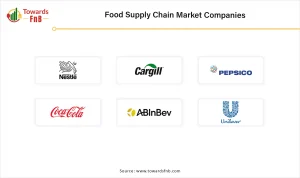
1. Nestlé S.A.
- Overview: Headquartered in Vevey, Switzerland, Nestlé is the world’s largest food & beverage company, operating in ~185 countries with 277,000 employees.
- Recent moves: In 2025 Nestlé has ramped its digital-core upgrade to enable AI & automation at scale.
- Competitive edge: Global scale and brand equity give Nestlé unmatched reach. Its deep footprint allows it to integrate sourcing, manufacturing, logistics and retail partnerships. Its push into digital and protein-science are forward-looking.
- Future outlook: In the food supply chain context, Nestlé is well-positioned to demand high-performance supply-chain partners (cold chain, digital traceability, fresh/frozen logistics). Expect further investment in emerging markets, increasing focus on fresh and plant-based segments, and higher supply-chain transparency.
2. Cargill, Incorporated
- Overview: A private U.S.-based multinational with operations in more than 70 countries. It spans agriculture, trading, food ingredients, processing and logistics.
- Recent moves: At the 2025 CISCE event Cargill demonstrated its full-chain “field-to-fork” capabilities using digital technologies.
- Competitive edge: Cargill’s vertical integration (origination, processing, logistics, distribution) gives it control and resilience. Its long-term presence in farm sourcing, ingredient markets and logistics hubs makes it a critical player in supply-chain networks.
- Future outlook: As food supply chains become more complex, Cargill can serve as a backbone partner for other firms looking to outsource or co-develop their logistics/supply-chain layers. Expect growth in value-added services (digital insights, risk management, traceability) and further global expansion into cold-chain, emerging markets and sustainability services.
3. PepsiCo, Inc.
- Overview: Headquartered in Purchase, New York, PepsiCo is a global food & beverage leader (snacks and beverages) operating in over 200 countries.
- Recent moves: PepsiCo is integrating its food and beverage supply-chains into a single network (North America) with an investment of ~$60 billion over time.
- Competitive edge: Brand power aside, PepsiCo’s supply-chain transformation shows its commitment to deep operational agility. With snack and beverage operations, it has to manage a far wider variety of logistics (frozen, ambient, fresh), which gives it a supply-chain muscle that a pure CPG may not.
- Future outlook: In the food-supply-chain market, PepsiCo will continue to push for more efficiency, integration and sustainability across its sourcing, manufacturing and delivery. Suppliers offering advanced solutions (digital, logistics, sustainability) will find opportunity with PepsiCo’s ecosystem. Risk: global cost pressures and trade-related supply-chain inflation.
4. Mondelez International, Inc.
- Overview: Based in Chicago, Illinois, Mondelez is a leading snacks company operating in over 150 countries, employing 90,000 people.
- Recent moves: The company is undergoing a US$1.2 billion ERP and supply-chain transformation over the next four years (from 2024) in partnership with SAP, Accenture and o9.
- Competitive edge: With a global snack-focused portfolio, Mondelez has highly optimised logistics for fast-moving consumer goods. Its investments in digital transformation suggest it takes supply-chain as strategic leverage, not just cost centre.
- Future outlook: Mondelez will likely continue building supply-chain agility (especially in emerging markets) and sustainability credentials (especially cocoa, packaging). For buyers in the supply-chain market it signals further opportunities in technology-enabled services (ERP, logistics, analytics) and demands for transparent supply-chain solutions.
5. Bunge Limited
- Overview: Bunge Limited (also referenced as Bunge Global) is a global agribusiness and food company headquartered in St. Louis, Missouri. It spans the full agricultural value chain: origination of oilseeds and grains, processing (vegetable oils, protein meals), and distribution of food and feed products.
- Recent Moves: Bunge emphasises low-carbon solutions across its global supply chains and boasts a broad footprint working with farmer networks worldwide.
- Competitive Edge: The company’s integrated agribusiness model gives it scale in sourcing, trading and processing meaning good positioning in upstream raw-material markets (grains, oilseeds) and feed/food ingredients. Its global origin-to‐consumer chain also provides resilience and flexibility.
- Future Outlook: As the food supply chain market evolves, Bunge is well-placed to benefit from demand for “ingredients & upstream inputs” rather than just finished food. In particular, as fresh produce, cold-chain and traceability grow, companies like Bunge that bridge farming, processing and logistics will have advantage. Also, focus on low-carbon and sustainability could create new growth levers (e.g., oils/vegetable proteins, alternative feed).
6. Danone
- Overview: Danone is a French multinational food & beverage company headquartered in Paris, operating in more than 120 markets with ~90,000 employees. Its core business segments are Essential Dairy & Plant-based products, Waters, and Specialized Nutrition.
- Recent Moves: In 2025, Danone acquired a majority stake in U.S. plant-based organic nutrition company Kate Farms in order to expand its specialized nutrition offerings.
- Competitive Edge: Danone’s mission “bringing health through food” underpins its strength in dairy & plant-based nutrition, combined with global footprint and R&D capability. Its presence across emerging markets as well as developed ones supports diversified growth.
- Future Outlook: Going forward, Danone will likely deepen its plant-based and specialized nutrition segments, and further build its supply‐chain transparency and sustainability credentials (especially since health-focused consumers increasingly demand traceability). Supply chain partners that help Danone deliver premium, clean-label, plant-based and fresh formats may get prioritized.
7. Kellogg’s (now reorganised)
- Overview: Founded in 1906, the Kellogg Company (doing business as Kellogg’s) has been a major player in cereal and convenience foods. As of October 2023 the company finalised a structural re-organisation: the North American cereal business split into a separate entity (WK Kellogg Co) while the remainder became Kellanova (snacks, international operations).
- Recent Moves: The separation is designed to sharpen focus on each business line cereals vs snacks/foods. This re-focus is significant in supply‐chain terms because cereals and snacks have different logistics, shelf life, channel demands.
- Competitive Edge: Kellogg’s legacy brand strength (Corn Flakes, Special K, etc) gives it strong market recognition. The reorganisation may allow more agile supply-chain strategies (snacks vs cereals) and better alignment with consumer preferences (e.g., convenience, global snack growth).
- Future Outlook: For supply chain implications, the snack side (Kellanova) will likely invest more in agile logistics, global supply-chain optimisation, and traceability. Meanwhile the cereal side (WK Kellogg) might focus on core markets, ingredients, sustainability of grains. Suppliers that can provide flexibility (smaller batches, global sourcing, faster lead times) may benefit.
8. Mars Inc.
- Overview: Mars is a U.S.-based family-owned global company (headquartered in McLean, Virginia) operating in four business segments: Mars Wrigley (confectionery), Petcare, Food, and Mars Edge (life sciences/nutrition). Founded in 1911.
- Recent Moves: Mars continues strategic acquisitions in snacks and nutrition (for instance acquiring whole-fruit snacking brand Trü Frü) and expands its nutrition/food portfolio.
- Competitive Edge: Mars benefits from its diversified portfolio (snacks, pet, food) and long-term ownership structure which allows for generational thinking rather than just quarter-by-quarter. The wide international footprint and scale support supply-chain optimisation.
- Future Outlook: In the context of food supply chains, Mars will need to invest further in sustainable sourcing (cocoa, ingredients), traceability, and faster logistics to support snack categories with global demand. Suppliers that can meet high standards in traceability, sustainability and global distribution will align well with Mars’s trajectory.
9. Mondelez International
- Overview: Mondelez International (headquartered in Chicago, Illinois) is a global snacks powerhouse operating in ~150+ countries, with a portfolio that includes biscuits, chocolate, gum & candy (brands like Oreo, Ritz, Toblerone, Cadbury).
- Recent Moves: The company is investing in large supply-chain transformation programmes, including ERP and logistics upgrades, to support its global snack business. (Background research shows major investments though specific recent moves in this dataset are limited.)
- Competitive Edge: Mondelez’s brand portfolio and global scale give it strength. Its focus on snack categories which are growing means its supply-chain demands emphasise speed, freshness, agility, global sourcing and strong logistics.
- Future Outlook: Mondelez will likely continue building its supply chain into a competitive advantage digitalisation, supply-chain transparency, faster route-to-market and sustainability will matter. Supply chain firms and partners who can support the snack supply-chain in emerging markets will find opportunities with Mondelez.
10. Walmart Inc.
- Overview: Walmart is a retail behemoth, with global operations and one of the most advanced supply chain systems in the food and general merchandise sectors. The company relies on massive logistics, data, automation and efficiency to deliver “Everyday Low Prices”.
- Recent Moves: Walmart continues to modernise its grocery network and supply chain (e-commerce + in-store integration). For example, in July 2024 it announced next steps in its grocery network transformation.
- Competitive Edge: Walmart’s supply-chain sophistication is world-class: its fleet, global sourcing, automation, data transparency and logistics model give it cost and scale advantages. For food supply chains, it sets a high bar for speed, efficiency, traceability and cost control.
- Future Outlook: In the next five years, Walmart will increasingly demand its suppliers and supply-chain partners deliver real-time data, shorter lead-times, multi-channel fulfilment, and sustainability credentials. Firms able to provide agile, omnichannel logistics and supply-chain transparency will be prime candidates for Walmart’s ecosystem.
Invest in Our Premium Strategic Solution: https://www.towardsfnb.com/checkout/5596
Why Competition Is Intensifying
Multiple factors are driving the heat in the food supply chain market:
- Technology acceleration: Blockchain, IoT, AI/ML have matured enough that laggards are falling behind, so firms race to level up.
- Fresh & global sourcing pressures: As consumers demand fresher, globalised food options, supply chains must be faster, colder, higher-visibility. That creates room for new entrants, niche players and service providers.
- Sustainability & transparency imperatives: Buyers now demand ESG-compliant, traceable supply chains. Firms must compete not just on cost but on credentials raising the bar across the market.
- Distribution & channel shifts: E-commerce, omni-channel retail, food-service evolution mean logistics networks must adapt; supply-chain firms offering agility get an edge.
- Emerging-market growth: Regions such as Asia-Pacific are forecast to grow fastest; local supply-chain infrastructure is fragmented, so opportunity and competition both increase.
- Margin pressures: As consumers demand value and as inflation/transport costs rise, supply-chain efficiency becomes a competitive battleground firms that cannot reduce cost, waste or lead time will be squeezed.
What’s Next: 2025-2030 Outlook
Looking ahead from 2025 to 2030, several trends will shape how this market evolves:
- Digital-first supply chains become standard: By 2030 firms will have moved from pilot phases of blockchain/IoT/AI to full-scale deployment supply-chain visibility, predictive analytics and automated logistics will be baseline expectations.
- Fresh & short-chain takeoff: Fresh produce and organic foods will grow faster than ambient packaged goods. Supply chains that shorten intermediaries (farm-to-consumer), build local cold infrastructure and ensure minimal spoilage will capture share.
- Regionalisation + resiliency: After recent disruptions, supply chains will shift toward more regional hubs, dual-sourcing, multi-modal flexibility, and risk-mitigation models built around just-in-time and redundancy.
- Sustainability becomes competitive standard: Net-zero emissions, regenerative agriculture, zero-waste packaging will move from “nice” to “must”. Supply-chain partners lacking credible ESG road-maps will lose buyer contracts.
- Emerging markets surge: Asia-Pacific, Latin America and MEA will grow faster than mature markets; infrastructure investments (cold-storage, refrigerated transport, digital logistics) will rise, opening new supplier opportunities.
- Service-oriented supply-chain business models expand: Many firms will buy supply-chain “capabilities” as a service logistics + digital dashboards + analytics rather than owning every asset. This means traditional manufacturers may outsource more to third-party specialists.
- By 2030, we’re likely to see the global market well beyond the USD 359 billion forecast for 2034, as accelerated adoption and unexpected macro-shocks push growth upward.
Future Outlook
For buyers, investors and industry leaders, 2025 is more than a milestone it’s the execution year. If you’re a buyer (retailer, food-service, brand), prioritise supply-chain partners that offer digital visibility, freshness logistics, scalability and sustainability. If you’re an investor, look at companies that are building not just talking about traceability, cold-chain infrastructure and regional growth networks. And if you’re an industry leader or supplier, the window to become a preferred partner is open now but it demands rapid investment in technology, sustainability, agility and end-to-end integration. The food supply chain market isn’t just growing it’s transforming. And the winners will be those who adapt fastest.
Become a Valued Research Partner with Us – Schedule a meeting: https://www.towardsfnb.com/schedule-meeting
Feel Free to Get in Touch with Us for Orders or Any Questions at: sales@towardsfnb.com
Unlock expert insights, custom research, and premium support with the FnB Market Pulse Annual Membership. For USD 495/month (billed annually), get full access to exclusive F&B market data and personalized guidance. It’s your strategic edge in the food and beverage industry: https://www.towardsfnb.com/get-an-annual-membership
About Us
FnB Market Pulse is a global consulting firm specializing in the food and beverage industry, providing innovative solutions and expert guidance to elevate businesses. With an in-depth understanding of the dynamic F&B sector, we deliver customized market analysis and strategic insights. Our team of seasoned professionals is committed to empowering clients with the knowledge needed to make informed decisions, ensuring they stay ahead of market trends. Partner with us as we redefine success in the rapidly evolving food and beverage landscape, and together, we’ll navigate this transformative journey.