
The global food grade lubricants market is projected to see substantial growth, reaching an estimated USD 491.01 million in size, up from USD 448 million in 2024. By 2034, the market is expected to balloon to around USD 1.12 billion, growing at a robust CAGR of 9.6%. What’s driving this surge? As food processing, beverage production, and manufacturing processes grow more complex, the demand for high-quality, safe lubricants increases. With a sharp focus on sustainability, health benefits, and technological advancements, this sector is poised to meet the evolving needs of industries handling food, beverages, and pharmaceuticals. But what does this mean for industry players, buyers, and investors in 2025? Let’s explore.
Key Takeaways for 2025
- The food grade lubricants market is poised to grow from USD 491.01 million in 2025 to USD 1.12 billion by 2034, driven by a 9.6% CAGR.
- North America holds the largest market share, led by strong demand in the refining and food manufacturing sectors.
- Asia Pacific is expected to grow at a remarkable 12% CAGR, driven by transition investments and increasing adoption of bio-based lubricants.
- The bio-based lubricants segment is forecast to grow rapidly, thanks to their health and environmental benefits.
- The beverages sector is set to experience the fastest growth due to increased use of lubricants in beverage production processes.
Want to Explore More? Get a Free Sample Report:
https://www.towardsfnb.com/download-sample/5604
2025 Buyer Playbook: What Drives Purchase Decisions?
For buyers in the food grade lubricants market, several factors determine their purchasing decisions. Here’s a quick look at what’s shaping the 2025 buyer playbook:
- Product Versatility and Performance: Buyers are increasingly looking for lubricants that not only perform well but also provide a broad range of applications across food and beverage production processes. This includes everything from machinery lubrication to preventing rust on equipment, with a growing focus on those that are biodegradable and safe for food contact.
- Sustainability: As environmental concerns become more pressing, buyers are prioritizing lubricants that align with sustainable practices. Bio-based lubricants, in particular, are gaining traction because of their reduced environmental impact and superior performance compared to mineral-based products.
- Health and Safety Compliance: With stringent food safety regulations, food grade lubricants must comply with various standards, including NSF (National Sanitation Foundation) certifications. Buyers prefer products that meet these standards, ensuring the safety of both food and beverage products during processing.
- Cost Efficiency: While performance is critical, buyers also seek cost-effective solutions that can help them reduce overall maintenance and downtime costs. Bio-based and synthetic lubricants, although often more expensive, promise longer operational lifespans and better overall efficiency.
- Technological Advancements: The integration of digital technologies such as IoT-enabled lubrication systems, predictive maintenance, and real-time monitoring is transforming the food grade lubricants market. Buyers value suppliers who offer innovative solutions that improve operational efficiency and minimize equipment failures.
In-Depth Company Profiles: The Market Leaders in 2025
Let’s dive into the profiles of the major players in the food grade lubricants market.
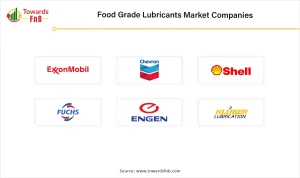
1. ExxonMobil Corporation
- Overview: ExxonMobil is a global leader in oil and gas, with a strong presence in the lubricants market, including food-grade products.
- Recent Moves: ExxonMobil announced a major corporate plan for 2030, projecting significant earnings growth through strategic investments and innovation in cleaner energy and lubrication solutions.
- Competitive Edge: ExxonMobil’s vast global distribution network, combined with its advanced technology in lubricant formulations, gives it a strong competitive edge.
- Future Outlook: With increasing demand for sustainable lubricants, ExxonMobil is likely to continue innovating in bio-based and synthetic solutions to cater to the food and beverage sector’s growing needs.
2. Chevron Corporation
- Overview: Chevron is a multinational corporation that provides a wide range of lubricants for various industries, including food-grade applications.
- Recent Moves: Chevron invested $1 billion in the establishment of its Chevron Engineering and Innovation Excellence Center in India, focusing on developing advanced lubricants and energy solutions.
- Competitive Edge: Chevron’s extensive R&D investments and deep expertise in high-performance lubricants make it a key player in the food-grade lubricants market.
- Future Outlook: Chevron’s focus on sustainability and innovations in lubrication technologies will likely solidify its position in the market, especially in the bio-based lubricant sector.
3. Shell plc
- Overview: Shell is a well-known name in the energy and lubrication sectors, producing food-grade lubricants that meet global food safety standards.
- Recent Moves: Shell has been expanding its portfolio of bio-based lubricants and has focused on enhancing the sustainability and performance of its products.
- Competitive Edge: Shell’s commitment to sustainability and eco-friendly formulations, combined with its global reach, makes it a preferred choice for large-scale food and beverage manufacturers.
- Future Outlook: Shell’s investment in sustainable products and its continuous R&D efforts will enable it to capture a larger share of the growing bio-based and synthetic lubricant market.
4. Fuchs
- Overview: Fuchs is a leading global provider of specialty lubricants, including food-grade products, with a strong focus on innovation and sustainability.
- Recent Moves: Fuchs recently launched a new line of biodegradable food-grade lubricants designed to offer better performance and lower environmental impact.
- Competitive Edge: Fuchs’ emphasis on high-performance and sustainable lubricants, combined with its extensive industry experience, gives it an edge in meeting the needs of food and beverage manufacturers.
- Future Outlook: Fuchs is expected to continue expanding its footprint, particularly in the bio-based and eco-friendly lubricant segments, which are rapidly gaining traction in the market.
5. Klüber Lubrication
- Overview: Klüber Lubrication is a prominent player in the lubricant market, providing a wide range of food-grade solutions, including both synthetic and mineral-based lubricants.
- Recent Moves: Klüber has introduced a series of food-grade lubricants designed to improve energy efficiency and extend the life of machinery in food processing plants.
- Competitive Edge: Known for its high-performance lubricants, Klüber offers tailored solutions that help optimize maintenance cycles and reduce operational costs for food manufacturers.
- Future Outlook: Klüber’s continuous product innovation, particularly in the area of energy-efficient and environmentally friendly lubricants, positions it for growth in the next decade.
6. Mosil Lubricants PVT LTD
- Overview: Mosil is an Indian manufacturer of high-quality lubricants, including food-grade products for a range of applications.
- Recent Moves: The company has increased its focus on bio-based and eco-friendly lubricants, aligning with the growing trend toward sustainability in the food industry.
- Competitive Edge: Mosil’s cost-effective solutions and ability to cater to the specific needs of the Indian food processing industry make it a key player in the region.
- Future Outlook: As demand for sustainable lubricants rises, Mosil is likely to see significant growth in both the local and international food lubricants markets.
7. Bharat Petroleum Corporation Limited
- Overview: Bharat Petroleum, a leading Indian oil company, also produces food-grade lubricants used in various industrial applications.
- Recent Moves: Bharat Petroleum has recently expanded its product range to include high-performance food-grade lubricants aimed at the growing food and beverage sector in India.
- Competitive Edge: With a strong local presence and expertise in petroleum products, Bharat Petroleum is well-positioned to meet the increasing demand for food-grade lubricants in the Indian market.
- Future Outlook: As India’s food processing industry grows, Bharat Petroleum is set to capitalize on the demand for high-quality food-grade lubricants, particularly in the growing beverage sector.
8. Dow
- Overview: Dow is a major player in chemicals and lubricants, offering advanced solutions for food-grade lubrication, with a focus on sustainability and high-performance products.
- Recent Moves: Dow has made significant strides in the development of bio-based and biodegradable food-grade lubricants, reflecting the growing demand for eco-friendly solutions.
- Competitive Edge: Dow’s R&D capabilities and focus on sustainable product development give it a competitive edge in the food lubricants market.
- Future Outlook: Dow’s ongoing innovations in sustainability and its strong position in the bio-based lubricant market will likely contribute to its continued growth.
9. Petro-Canada Lubricants Inc.
- Overview: Petro-Canada Lubricants is a global provider of high-quality lubricants, including food-grade options for the food processing industry.
- Recent Moves: The company has expanded its food-grade lubricant offerings to include synthetic options that provide better performance and extended machinery life.
- Competitive Edge: Petro-Canada’s ability to provide high-performance lubricants with a focus on cost efficiency and sustainability gives it a strong foothold in the market.
- Future Outlook: Petro-Canada is poised to expand further into the bio-based lubricant market and continue to meet the growing demand for eco-friendly food-grade lubricants.
10. The Lubrizol Corporation
- Overview: The Lubrizol Corporation is a global leader in specialty chemicals, offering a wide range of food-grade lubricants used in various food and beverage applications.
- Recent Moves: Lubrizol has been focusing on increasing the performance and sustainability of its lubricants, launching several bio-based products in 2024.
- Competitive Edge: Lubrizol’s expertise in chemical formulations and its commitment to sustainability make it a preferred partner for food manufacturers seeking high-performance lubricants.
- Future Outlook: Lubrizol’s continuous focus on R&D and sustainability will enable it to stay at the forefront of the food-grade lubricants market.
Invest in Our Premium Strategic Solution: https://www.towardsfnb.com/checkout/5604
Why Competition Is Intensifying
The food grade lubricants market is becoming increasingly competitive as companies focus on meeting growing demand for sustainable, high-performance products. Technological advancements in lubricant formulations, along with the rising importance of food safety regulations, are driving innovation. Additionally, the trend toward eco-friendly products, including bio-based lubricants, is spurring companies to differentiate themselves. As the market expands, companies are vying to meet the evolving needs of food, beverage, and pharmaceutical manufacturers, intensifying competition.
What’s Next: 2025-2030 Outlook
The food grade lubricants market is expected to continue its growth trajectory through 2030. With the increasing demand for sustainable solutions, bio-based lubricants will likely become a dominant segment. As digital technologies like IoT and AI are integrated into lubrication systems, predictive maintenance and real-time monitoring will further enhance product efficiency. The next decade will also see significant growth in the Asia Pacific region, driven by the booming food and beverage industries, and the rising preference for healthier, eco-friendly lubricants.
Future Outlook
For buyers, investors, and industry leaders, the food grade lubricants market in 2025 represents a thriving and evolving space full of opportunity. Companies that invest in sustainability, technological innovation, and regulatory compliance will be best positioned to succeed. As the market grows, stakeholders must focus on adapting to shifting consumer preferences and technological advancements to maintain a competitive edge. Now is the time to leverage these opportunities and stay ahead in the rapidly expanding food-grade lubricants market.
Become a Valued Research Partner with Us – Schedule a meeting: https://www.towardsfnb.com/schedule-meeting
Feel Free to Get in Touch with Us for Orders or Any Questions at: sales@towardsfnb.com
Unlock expert insights, custom research, and premium support with the FnB Market Pulse Annual Membership. For USD 495/month (billed annually), get full access to exclusive F&B market data and personalized guidance. It’s your strategic edge in the food and beverage industry: https://www.towardsfnb.com/get-an-annual-membership
About Us
FnB Market Pulse is a global consulting firm specializing in the food and beverage industry, providing innovative solutions and expert guidance to elevate businesses. With an in-depth understanding of the dynamic F&B sector, we deliver customized market analysis and strategic insights. Our team of seasoned professionals is committed to empowering clients with the knowledge needed to make informed decisions, ensuring they stay ahead of market trends. Partner with us as we redefine success in the rapidly evolving food and beverage landscape, and together, we’ll navigate this transformative journey.