
The food automation market is rapidly evolving and is expected to reach USD 14.92 billion in 2025, growing steadily to USD 28.61 billion by 2034. With a compound annual growth rate (CAGR) of 7.5% over the forecast period, the market is set to revolutionize the way food is produced, processed, and packaged. The driving force behind this expansion includes technological advancements in artificial intelligence (AI), robotics, and automation systems, alongside rising consumer demand for processed and packaged foods. As we approach 2025, this year is particularly significant due to the rapid pace of change that the food industry is experiencing.
Key Takeaways for 2025
- The global food automation market is projected to grow at a CAGR of 7.5%, reaching nearly USD 28.61 billion by 2034.
- North America will continue to dominate the market, fueled by innovations in AI, robotics, and stringent food safety regulations.
- Asia Pacific is expected to see robust growth, driven by rapid urbanization and increased demand for packaged food.
- Automation in food packaging will remain a major driver, with the processing sector also gaining significant momentum.
- The increasing integration of AI and machine learning into food processing systems will lead to more efficient and safer production lines.
Want to Explore More? Get a Free Sample Report:
https://www.towardsfnb.com/download-sample/5603
The 2025 Buyer Playbook: What Drives Purchase Decisions?
As the food automation market accelerates, what truly drives purchase decisions for buyers? Several key factors are at play:
- Cost Efficiency: Businesses in the food industry are constantly seeking ways to reduce costs. Automation provides a significant opportunity to lower labor costs, enhance production speed, and minimize errors in food processing.
- Food Safety and Quality Control: With the increasing demand for high-quality food products and the rise in foodborne illnesses, automation plays a crucial role in ensuring consistent quality, safety, and compliance with global food safety standards.
- Technological Advancements: The integration of AI, robotics, and advanced data analytics has revolutionized food production. Buyers are drawn to automated systems that improve operational efficiency and provide predictive maintenance capabilities, thereby reducing downtime and increasing productivity.
- Consumer Demand for Convenience: As lifestyles become busier, consumers are turning to more packaged and processed foods. This shift has increased the demand for automation in food packaging and production processes.
- Sustainability: Growing awareness of environmental issues has led to an increase in demand for eco-friendly, energy-efficient automation solutions that help reduce food waste, improve energy usage, and ensure sustainable practices.
In-Depth Company Profiles: The Market Leaders in 2025
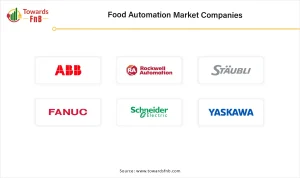
1. ABB
- Overview: ABB is a global leader in industrial automation and robotics, known for providing cutting-edge solutions across various sectors, including food processing and packaging.
- Recent Moves: In 2024, ABB introduced a series of AI-powered automation solutions aimed at increasing efficiency in food packaging lines.
- Competitive Edge: ABB’s strong focus on robotics and AI integration allows it to offer highly sophisticated automation solutions that improve both productivity and food safety.
- Future Outlook: ABB is likely to continue expanding its footprint in the food automation sector, particularly with its AI-powered solutions that are becoming crucial for the industry’s digital transformation.
2. Rockwell Automation
- Overview: Rockwell Automation offers integrated automation systems that drive operational efficiency in the food and beverage industry. Their solutions span everything from control systems to industrial software.
- Recent Moves: Rockwell recently enhanced its automation offerings with the launch of its “FactoryTalk” digital solutions, enabling smart factory operations in the food sector.
- Competitive Edge: With its robust industrial automation portfolio, Rockwell offers reliable, scalable solutions that improve both operational and process efficiency.
- Future Outlook: Rockwell’s continued emphasis on smart manufacturing will help them remain a key player in food automation, catering to the increasing demand for flexible, intelligent systems.
3. Staubli International AG
- Overview: Staubli is a leader in robotics and automation solutions, focusing on industries such as food, pharmaceuticals, and automotive. Their robotics solutions are widely used in food production, packaging, and sorting.
- Recent Moves: Staubli introduced its next-generation robotic arms designed for food handling applications, increasing speed and precision in food sorting and packaging.
- Competitive Edge: Staubli’s robotic solutions are known for their precision and flexibility, making them ideal for tasks in delicate food handling, packaging, and sorting.
- Future Outlook: As demand for efficient and high-quality food processing increases, Staubli’s robotic innovations are expected to gain even more traction in the market.
4. FANUC Corporation
- Overview: FANUC is a world-renowned manufacturer of automation and robotics solutions. Its systems are widely used in food production and packaging.
- Recent Moves: FANUC unveiled several new robotic arms designed specifically for food applications, focusing on automation for packaging lines, food sorting, and handling.
- Competitive Edge: FANUC’s robotics systems are known for their reliability and high performance. Their focus on developing robotic arms capable of handling sensitive food products gives them a competitive edge in the market.
- Future Outlook: With an increasing demand for automation in the food industry, FANUC’s innovations in robotic systems are expected to continue growing in relevance.
5. Schneider Electric
- Overview: Schneider Electric provides energy management and automation solutions, with a strong presence in the food and beverage industries.
- Recent Moves: In 2024, Schneider Electric launched new energy-efficient automation systems, helping food producers optimize energy consumption while increasing production capacity.
- Competitive Edge: Schneider Electric’s focus on energy efficiency, along with its comprehensive automation solutions, gives it a unique position in the food automation market.
- Future Outlook: As sustainability becomes more important in food production, Schneider Electric’s energy-efficient systems are likely to see increased adoption.
6. Yaskawa Electric Corporation
- Overview: Yaskawa Electric is a Japanese company renowned for its motion control and robotics solutions. In 2025, it continues to be a significant player in the food automation sector.
- Recent Developments: Yaskawa has been focusing on enhancing its robotics offerings, particularly in the food processing industry, to meet the growing demand for automation solutions.
- Competitive Edge: The company’s expertise in robotics and motion control systems positions it as a leader in providing precise and efficient automation solutions.
- Future Outlook: Yaskawa aims to expand its presence in the global food automation market by leveraging its technological advancements and strong industry partnerships.
7. Siemens AG
- Overview: Siemens AG is a German multinational conglomerate with a strong presence in automation and digitalization.
- Recent Developments: In 2025, Siemens announced a $285 million investment in U.S. manufacturing, including new facilities in California and Texas, to enhance its AI and automation capabilities
- Competitive Edge: Siemens’ comprehensive portfolio, including its Xcelerator platform, offers integrated automation solutions that cater to various industries, including food processing.
- Future Outlook: Siemens plans to continue expanding its automation solutions globally, focusing on AI-driven innovations and sustainable practices.
8. Omron Corporation
- Overview: Omron is a Japanese company specializing in industrial automation, sensing, and control technologies.
- Recent Developments: Omron has been actively developing AI-driven automation solutions to address challenges in food manufacturing, such as labor shortages and the need for enhanced food safety.
- Competitive Edge: Omron’s integration of AI and IoT technologies into its automation systems provides manufacturers with intelligent and adaptable solutions.
- Future Outlook: Omron aims to lead the transition towards autonomous food manufacturing systems by advancing its AI and robotics technologies.
9. Marel
- Overview: Marel is an Icelandic company specializing in advanced food processing equipment and systems.
- Recent Developments: In 2025, Marel introduced CIPure™, an automated cleaning system that enhances sanitation and sustainability in food processing
- Competitive Edge: Marel’s focus on innovation and sustainability in food processing positions it as a key player in the automation market.
- Future Outlook: Marel plans to expand its product offerings and global reach, focusing on sustainable and efficient food processing solutions.
10. Middleby Corporation
- Overview: Middleby is a U.S.-based company that designs and manufactures equipment solutions for commercial foodservice and food processing industries.
- Recent Developments: In 2025, Middleby announced plans to spin off its food processing business to focus on its core operations
- Competitive Edge: Middleby’s extensive portfolio and expertise in food processing equipment make it a significant player in the automation market.
- Future Outlook: The spin-off is expected to allow Middleby to concentrate on its core competencies, while the new entity focuses on advancing food processing automation.
Invest in Our Premium Strategic Solution: https://www.towardsfnb.com/checkout/5603
Why Competition Is Intensifying
The food automation market is becoming increasingly competitive due to the following factors:
- Technological Advancements: Rapid advancements in AI, robotics, and data analytics are providing companies with new tools to enhance food production processes. As these technologies evolve, companies are racing to offer the most innovative and efficient solutions.
- Consumer Demand: The growing demand for processed and packaged foods is pushing food producers to adopt automation technologies to meet consumer expectations for faster, high-quality, and safe food products.
- Labor Shortages: With labor shortages becoming more prevalent, automation is seen as a key solution to address the lack of workers, particularly in repetitive tasks like sorting and packaging.
- Regulatory Pressures: Stricter food safety regulations globally are forcing companies to adopt automation solutions that can ensure compliance and reduce the risk of contamination.
- Cost Reduction: As food manufacturers face increasing pressure to reduce costs, automation offers an effective way to improve operational efficiency, decrease labor costs, and reduce errors in the production process.
What’s Next: 2025-2030 Outlook
Looking ahead, the food automation market is set to undergo significant transformations from 2025 to 2030. Here are some key trends to watch:
- Increased AI Integration: AI and machine learning will continue to play a central role in food automation, helping to predict maintenance needs, optimize supply chains, and improve food safety.
- Robotics and Automation in Food Handling: Robotic solutions designed for handling delicate food products will see significant growth, particularly in packaging and sorting applications.
- Sustainability Focus: As consumer demand for sustainable practices increases, food automation systems will continue to evolve to be more energy-efficient and reduce waste.
- Global Expansion: The Asia Pacific region will lead in growth, particularly with increased automation investments in countries like China, Japan, and India, where urbanization and demand for packaged foods are accelerating.
- Regulatory Innovations: Governments will continue to tighten food safety regulations, which will drive further investments in automation technologies that ensure compliance with these new standards.
Future Outlook
What This Means for Buyers, Investors, and Industry Leaders
- For buyers, the food automation market offers significant opportunities to improve production efficiency, reduce labor costs, and enhance food safety. With increasing consumer demand for packaged, processed foods and stricter food safety standards, automation will be crucial to meeting these demands.
- For investors, the rising adoption of AI, robotics, and automation technologies presents a promising landscape for growth. Companies at the forefront of these technologies are likely to provide substantial returns over the coming years.
- For industry leaders, staying ahead of the curve means investing in the latest automation technologies, focusing on AI integration, and prioritizing sustainability to meet the changing expectations of consumers and regulators.
As we head into 2025, food automation will play a pivotal role in shaping the future of food production. Understanding these trends and key players will be essential for businesses looking to stay competitive and meet the demands of a rapidly evolving market.
Become a Valued Research Partner with Us – Schedule a meeting: https://www.towardsfnb.com/schedule-meeting
Feel Free to Get in Touch with Us for Orders or Any Questions at: sales@towardsfnb.com
Unlock expert insights, custom research, and premium support with the FnB Market Pulse Annual Membership. For USD 495/month (billed annually), get full access to exclusive F&B market data and personalized guidance. It’s your strategic edge in the food and beverage industry: https://www.towardsfnb.com/get-an-annual-membership
About Us
FnB Market Pulse is a global consulting firm specializing in the food and beverage industry, providing innovative solutions and expert guidance to elevate businesses. With an in-depth understanding of the dynamic F&B sector, we deliver customized market analysis and strategic insights. Our team of seasoned professionals is committed to empowering clients with the knowledge needed to make informed decisions, ensuring they stay ahead of market trends. Partner with us as we redefine success in the rapidly evolving food and beverage landscape, and together, we’ll navigate this transformative journey.