
The dairy food market enters 2025 with serious weight behind it. Valued at USD 1,005.87 billion in 2025, the industry is on track to hit USD 1,728.48 billion by 2034 at a 6.2% CAGR. That’s not just incremental growth it’s a structural expansion powered by rising incomes in developing economies, a global pivot to nutrition-first food choices, and relentless innovation from ingredient science to cold-chain logistics.
Why 2025 matters: policy updates in major markets (India, China, U.S.) tighten labeling and quality standards; retailers double down on private label; and consumers increasingly split between classic dairy and lactose-free/“better-for-you” options. The winners this year will be the players who can read regional demand, master hybrid portfolios (lactose + lactose-free), and move fast on data-driven NPD (new product development).
Key Takeaways for 2025
- Scale with purpose: The market climbs from USD 1.01T in 2025 toward USD 1.73T by 2034; Asia Pacific leads in value and volume, while North America posts the fastest growth trajectory.
- Two-speed demand: Lactose products still dominate revenue in 2025, but lactose-free rises the fastest as 70% of the world is at risk of lactose intolerance portfolios must serve both.
- Cheese accelerates: Cheese is the fastest-growing product category thanks to Western QSR/menu diffusion and home-cooking trends; milk remains the revenue anchor.
- Channels consolidate: Supermarkets/hypermarkets remain the command center for mass, while convenience stores and online capture incremental, high-frequency baskets.
- AI + sustainability = edge: AI-guided formulation and agile supply chains, plus valorization of by-products (acid whey, milk permeate), separate leaders from the pack.
Want to Explore More? Get a Free Sample Report:
https://www.towardsfnb.com/download-sample/5545
The 2025 Buyer Playbook: What Actually Wins Decisions
1) Nutritional credibility, not just claims. Buyers retailers, foodservice, and consumers reward brands that translate dairy’s nutrient density (calcium, protein, vitamin D, potassium) into clear use-cases: bone health, satiety, and metabolic wellbeing. Functional fortification and clean labels are no longer “premium” they’re table stakes.
2) Digestive comfort & choice. The fastest-growing deciding factor is tolerance. A retailer or foodservice buyer is likelier to expand shelf/faced space for ranges offering lactose-free SKUs alongside standard lines. If you can deliver taste parity and price discipline in lactose-free, you win the reset.
3) Flavor relevance by region. From Asia’s milk tea and yogurt drinks to Latin America’s fresh cheese traditions and North America’s snacking cheese boom localized, authentic flavors drive repeat. Brands that plug into ethnically rooted flavor maps will over-index on velocity.
4) Price predictability in a volatile cost base. With feed, fuel, and labor pressures still real, procurement teams prioritize suppliers who can hedge smartly and provide transparent, stable pricing. Contract structures with built-in flexibility rise in importance.
5) Availability beats everything. Consistent fill rates and cold-chain reliability trump many other attributes. Supermarkets favor suppliers who absorb shocks (weather, geopolitics) with diversified milk pools and multi-plant redundancy.
In-Depth Company Profiles: The Market Leaders in 2025
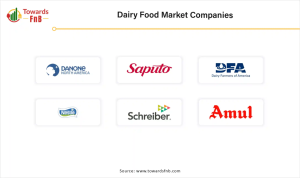
Below, we dig into the most influential players globally. For each, we outline overview, recent moves, competitive edge, and future outlook so buyers and investors can benchmark strategy, not just scale.
1. Lactalis
- Overview: The world’s largest dairy group with deep cheese, milk, and butter portfolios across multiple continents.
- Recent moves: Continued consolidation and brand rationalization in Europe; sharpening export routes for specialty cheeses.
- Edge: Global manufacturing footprint + mastery in cheese maturation and branding across premium and mainstream.
- Outlook: Expect sustained leadership in cheese and value creation via private label partnerships where margin math works.
2. Nestlé (Dairy)
- Overview: A nutrition powerhouse with dairy as a core engine across beverages, cereals integration, and culinary adjacencies.
- Recent moves: R&D on protein quality, sugar reduction, and digestibility; disciplined SKU architecture in emerging markets.
- Edge: R&D scale, route-to-market excellence, and cross-category shopper insights.
- Outlook: Balanced growth: premiumization in developed markets, accessible nutrition in APAC/MEA; more lactose-free and functional SKUs.
3. Danone
- Overview: Health-centric dairy and plant-based portfolios with strong yogurt equities.
- Recent moves: AI enablement across supply chain and workforce upskilling; functional gut-health propositions.
- Edge: Fermentation science + brand credibility in digestibility and wellness.
- Outlook: Gains from lactose-free, kefir, and kids’ nutrition; supply-chain agility remains a focus to protect margins.
4. Yili
- Overview: China’s dairy giant with national coverage and rapidly professionalizing innovation.
- Recent moves: Expanding high-protein, ambient, and functional lines; elevating export profile in Asia.
- Edge: Omnichannel execution in China + speed from concept to shelf.
- Outlook: Double-down on premium ESL/ambient, plus selective M&A for internationalization.
5. Mengniu
- Overview: Another top Chinese leader with strong UHT/ambient portfolios and active brand building.
- Recent moves: Data-led marketing and flavored dairy beverages; portfolio stretch into functional snacking.
- Edge: Marketing velocity and scale economics in China’s tiered city structure.
- Outlook: Share wins in flavored milk, yogurt drinks, and on-the-go packs; more digital commerce tie-ins.
6. Fonterra
- Overview: New Zealand co-op focused on ingredients (whey, powders) and B2B solutions; branded plays in select markets.
- Recent moves: Value-added ingredients for sports/medical nutrition; sustainability metrics embedded in trade.
- Edge: Grass-fed milk narrative + world-class ingredient science.
- Outlook: Ingredient-led growth with margin expansion; selective branded bets where “provenance” converts.
7. Dairy Farmers of America (DFA)
- Overview: U.S. farmer-owned co-op with one of the largest milk pools and diversified processing.
- Recent moves: Capacity optimization, further integration of post-merger assets, branded and private label balancing.
- Edge: Security of supply + scale in American staples (milk, cheese, butter).
- Outlook: Solid U.S. growth; export upside in cheese and milk powder as global demand recovers.
8. Arla Foods
- Overview: European co-op known for sustainability leadership and strong brands in butter, cheese, and yogurt.
- Recent moves: Carbon accounting at farm level, protein-rich skyr and quark expansion, channel-specific innovation.
- Edge: Credible climate action + Nordic/European quality halo.
- Outlook: Premium dairy and better-for-you lines continue to premiumize shelves, especially in Northern Europe and the UK.
9. Saputo
- Overview: North American and global cheese specialist with acquisitions that broaden category reach.
- Recent moves: Footprint optimization in the U.S. and Europe; investment in high-margin cheese formats.
- Edge: Expertise in mozzarella/cheddar and strong relationships with QSR and retail deli.
- Outlook: Gains tied to foodservice rebound and at-home pizza/pasta cycles; efficiency drives margin expansion.
10. Amul (Gujarat Co-op)
- Overview: India’s most recognized dairy brand, synonymous with value, reach, and reliability.
- Recent moves: Rapid capacity expansion, portfolio stretch into value-added milk, cheese, and flavored beverages.
- Edge: Unmatched distribution, compelling price-value, and national brand love.
- Outlook: Share capture in cheese and yogurt as Western menus scale; formidable in mass and mid-premium.
Invest in Our Premium Strategic Solution: https://www.towardsfnb.com/price/5545
Why Competition Is Intensifying
- Cost volatility rewards agile balance sheets.
Feed, fuel, processing, and labor inflation squeeze margins; only players with hedging strategies, diversified milk pools, and multi-plant networks can keep prices predictable for buyers. - The lactose-free race.
With lactose-free the fastest-growing type, everyone is racing to crack taste, texture, and cost parity in enzymatic solutions and microfiltration. First movers earn disproportionate shelf space. - Flavor innovation and regionalization.
Growth shifts to ethnic and authentic flavors, fermented formats, and on-the-go beverages; companies with AI-assisted NPD pipelines move from concept to pilot to shelf in months, not years. - Channel consolidation.
Supermarkets/hypermarkets demand high service levels and private-label excellence. Online and convenience stores create incremental occasions, pushing manufacturers to build multi-pack sizes, D2C bundles, and quick-commerce-friendly SKUs.
What’s Next: 2025-2030 Outlook
- Cheese keeps compounding. Western menus become mainstream across Asia and the Middle East; domestic production capacity rises, but imports of specialty cheeses still grow in markets where artisanal profiles lead (mozzarella, cheddar, parmesan variants).
- Milk evolves, doesn’t disappear. Milk holds the largest revenue share through the decade, but value migrates to fortified, high-protein, ESL/ambient, and portion-controlled formats.
- Ingredients surge quietly. Performance nutrition (whey isolates, caseinates), medical nutrition, and better-for-you snacking pull through ingredient-grade dairy at premium margins. Expect Fonterra-type models to outperform growth rates in consumer brands.
- Lactose-free mainstreams. Enzymatic and membrane technologies improve cost and flavor parity; lactose-free dairy becomes a default option in many SKUs, not a niche.
- AI-accelerated NPD. Machine learning crunches consumer panels, social chatter, and sales telemetry to design flavors and textures per region. Winners slash time-to-shelf and attrition in stage-gate.
- Sustainability monetizes. Valorization of by-products (acid whey, milk permeate) and farm-level carbon programs create new revenue and marketing narratives. Arla-style carbon accounting spreads, and retailers start linking preferential listings to validated climate progress.
- Supply chain gets smarter. Cold-chain IoT, predictive maintenance, and multi-origin sourcing blunt shocks. Companies with redundant capacity and near-market plants convert disruptions into market share.
Future Outlook
The dairy market in 2025 is big, fast-moving, and more nuanced than ever: USD 1.01 trillion today, marching toward USD 1.73 trillion by 2034. For buyers, the edge comes from backing suppliers who pair nutritional credibility with operational resilience and lactose-free leadership. For investors, look for ingredient science, cheese specialization, and AI-enabled innovation loops. For industry leaders, the mandate is clear: regionalize flavor, industrialize sustainability, and build supply chains that never blink because in the decade ahead, availability and trust will convert demand into durable growth.
Become a Valued Research Partner with Us – Schedule a meeting: https://www.towardsfnb.com/schedule-meeting
Feel Free to Get in Touch with Us for Orders or Any Questions at: sales@towardsfnb.com
Unlock expert insights, custom research, and premium support with the FnB Market Pulse Annual Membership. For USD 495/month (billed annually), get full access to exclusive F&B market data and personalized guidance. It’s your strategic edge in the food and beverage industry: https://www.towardsfnb.com/get-an-annual-membership
About Us
FnB Market Pulse is a global consulting firm specializing in the food and beverage industry, providing innovative solutions and expert guidance to elevate businesses. With an in-depth understanding of the dynamic F&B sector, we deliver customized market analysis and strategic insights. Our team of seasoned professionals is committed to empowering clients with the knowledge needed to make informed decisions, ensuring they stay ahead of market trends. Partner with us as we redefine success in the rapidly evolving food and beverage landscape, and together, we’ll navigate this transformative journey.