
The global coffee beans market is not just growing it’s thriving. Estimated at USD 43.94 billion in 2024, this market is set to surge to USD 47.46 billion in 2025, with projections to nearly double to USD 94.86 billion by 2034. With a compound annual growth rate (CAGR) of 8%, this expansion signals exciting opportunities for industry players, investors, and consumers alike. But why is 2025 such a crucial year for the coffee bean industry? What factors are driving this remarkable growth? Let’s dive into the market dynamics and explore how the landscape is shifting.
Key Takeaways for 2025
- Market Growth: The coffee beans market is forecast to grow from USD 47.46 billion in 2025 to USD 94.86 billion by 2034, with a CAGR of 8%.
- Regional Shifts: Europe remains the largest market, but Asia-Pacific is expected to experience the fastest growth due to a rising demand for ethically sourced products.
- Product Trends: Arabica beans continue to dominate, capturing 60% of the market share, but Robusta beans are seeing significant growth due to their bold flavor and cost-effectiveness.
- Application Surge: The food and beverage industry is the primary driver, with coffee beans used in a wide range of products. Meanwhile, the pharmaceutical industry is emerging as a fast-growing application sector.
- Ethical Consumption: Rising consumer interest in sustainable and certified coffee, along with the growing trend of specialty coffee, is influencing buying patterns.
Want to Explore More? Get a Free Sample Report:
https://www.towardsfnb.com/download-sample/5521
The 2025 Buyer Playbook: What Drives Purchase Decisions in the Coffee Beans Market?
As the coffee beans market accelerates, buyers ranging from large coffee chains to small boutique roasters and home consumers are making purchasing decisions based on several key factors:
- Flavor and Aroma: When it comes to coffee, taste is everything. Arabica beans, known for their smooth and mellow flavor, continue to lead the market. They represent the premium segment, preferred by coffee enthusiasts and specialty cafes. On the other hand, Robusta beans, known for their strong, bold flavor and higher caffeine content, are becoming increasingly popular for blends and espresso shots.
- Ethical Sourcing: As sustainability takes center stage, consumers are prioritizing coffee that comes from ethical, traceable sources. Certifications like Fair Trade and Organic are becoming important purchasing criteria for those conscious of environmental and social impacts.
- Quality and Origin: Coffee lovers are looking for high-quality, single-origin beans that offer distinctive flavors, often linked to specific regions. Whether it’s a vibrant Yirgacheffe from Ethiopia or a rich Colombian blend, traceability is key to attracting discerning buyers.
- Packaging and Freshness: Innovations in packaging and roasting technology are ensuring that coffee beans maintain their freshness longer, making them more appealing to consumers. Brands that invest in high-quality, sustainable packaging stand out in a crowded market.
- Price Sensitivity and Accessibility: While high-end specialty coffees capture a premium price, there is also a growing demand for affordable yet high-quality coffee, particularly in regions with expanding middle classes like Asia-Pacific. Brands that can offer both quality and accessibility are likely to gain a competitive edge.
In-Depth Company Profiles: The Market Leaders in 2025
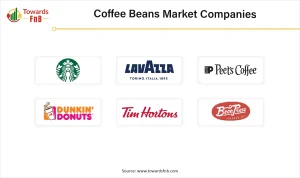
1. Starbucks
- Overview: As one of the largest and most recognized coffee brands globally, Starbucks leads the charge in coffee beans sourcing, roasting, and retailing. Known for its commitment to quality, Starbucks has a strong influence on both the retail and wholesale coffee markets.
- Recent Moves: Starbucks has focused on enhancing its sustainability efforts, with a significant push for ethically sourced beans through its Coffee and Farmer Equity (C.A.F.E.) Practices.
- Competitive Edge: Starbucks’ vast global presence, customer loyalty programs, and innovations in premium coffee offerings, like Reserve Roasteries, keep it ahead of competitors.
- Future Outlook: Starbucks aims to continue expanding its influence globally, especially in emerging markets in Asia-Pacific, where coffee consumption is on the rise.
2. Lavazza
- Overview: Known for its premium Italian coffee blends, Lavazza is a key player in both the retail and B2B coffee beans markets. The company has expanded globally, offering high-quality coffee beans that cater to both retail consumers and foodservice businesses.
- Recent Moves: Lavazza launched its “Tales of Italy” collection, a high-end range inspired by Italian coffee destinations, further solidifying its premium positioning.
- Competitive Edge: Lavazza’s Italian heritage and reputation for exceptional quality, combined with its global distribution network, give it a competitive advantage in the market.
- Future Outlook: Lavazza will likely continue to innovate with new coffee blends and expand its reach in international markets, particularly in Europe and North America.
3. Peet’s Coffee
- Overview: Known for its dark roasted coffee, Peet’s Coffee has a loyal customer base in the U.S. and is a major player in the specialty coffee segment.
- Recent Moves: Peet’s has been expanding its retail footprint and increasing its presence in the packaged coffee market.
- Competitive Edge: Peet’s commitment to high-quality beans and a focus on artisanal roasting methods have helped it stand out in the crowded U.S. coffee market.
- Future Outlook: Peet’s is poised to grow by diversifying its product line and expanding its footprint, particularly in international markets.
4. Dunkin’ Donuts
- Overview: Dunkin’ is not only known for its coffee drinks but also for its mass-market coffee beans. The brand serves a wide range of consumers from budget-conscious coffee drinkers to those seeking quick, reliable coffee.
- Recent Moves: Dunkin’ Donuts has expanded its coffee offerings with a focus on flavor innovations and limited-time seasonal coffee.
- Competitive Edge: Dunkin’s vast network of locations and strong brand recognition make it a formidable competitor in the mass-market coffee sector.
- Future Outlook: Dunkin’ is set to continue expanding its coffee product lines and strengthen its position in the competitive U.S. coffee market.
5. Kicking Horse Coffee Co. Ltd.
- Overview: Known for its organic, fair-trade coffee, Kicking Horse Coffee is a rising star in the premium coffee beans market.
- Recent Moves: The brand’s strong commitment to sustainability and organic certification is attracting more eco-conscious consumers.
- Competitive Edge: Kicking Horse’s focus on organic, fair-trade coffee beans, paired with its transparent sourcing practices, has made it popular among environmentally and socially conscious consumers.
- Future Outlook: With growing demand for organic products, Kicking Horse is expected to expand its market share, particularly among North American consumers.
6. Tim Hortons
- Overview: Founded in 1964 in Hamilton, Ontario, Tim Hortons is Canada’s largest quick-service restaurant chain, with over 5,700 locations worldwide.
- Recent Moves: In 2024, Tim Hortons opened its first location in Austin, Texas, marking a significant expansion into the U.S. market.
- Competitive Edge: Tim Hortons’ strong brand recognition and extensive menu offerings contribute to its market dominance.
- Future Outlook: The company plans to continue its expansion into new markets and enhance its digital platforms to improve customer experience.
7. Beanpress Coffee
- Overview: Established in 2010 in Poole, Dorset, Beanpress Coffee specializes in ethically sourced, hand-roasted coffee beans.
- Recent Moves: In 2013, Beanpress expanded its operations by purchasing a larger roasting machine from Joper in Portugal.
- Competitive Edge: The company’s commitment to quality and sustainability resonates with environmentally conscious consumers.
- Future Outlook: Beanpress aims to increase its market presence by expanding its product line and reaching new customer segments.
8. Heart Coffee Roasters
- Overview: Founded in 2009 by Rebekah and Wille Yli-Luoma, Heart Coffee Roasters is based in Portland, Oregon, and focuses on highlighting the distinct fruit flavors found in coffee.
- Recent Moves: The company operates two retail cafés and a roasting facility, emphasizing a positive and supportive workplace culture.
- Competitive Edge: Heart Coffee Roasters’ dedication to quality and innovation sets it apart in the competitive coffee market.
- Future Outlook: The company plans to expand its retail presence and continue its focus on quality and customer satisfaction.
9. Coffee Bean International, Inc.
- Overview: Based in Portland, Oregon, Coffee Bean International is a leading supplier of specialty coffee beans to the foodservice industry.
- Recent Moves: The company has been expanding its distribution network to reach a broader customer base.
- Competitive Edge: Coffee Bean International’s extensive experience and strong relationships with suppliers give it a competitive advantage.
- Future Outlook: The company aims to continue its growth by diversifying its product offerings and exploring new markets.
10. The Bean Coffee Company
- Overview: Founded in 2008, The Bean Coffee Company offers organic, micro-roasted coffee beans shipped directly to consumers.
- Recent Moves: The company emphasizes small-batch roasting to preserve the natural flavors of its coffee.
- Competitive Edge: The Bean Coffee Company’s focus on organic and natural products appeals to health-conscious consumers.
- Future Outlook: The company plans to expand its product line and increase its online presence to reach more customers.
Invest in Our Premium Strategic Solution: https://www.towardsfnb.com/price/5521
Why Competition Is Intensifying in the Coffee Beans Market
The coffee beans market is becoming more competitive as consumer preferences evolve. The rise of the third-wave coffee movement, characterized by a focus on artisanal, single-origin, and high-quality beans, has driven many coffee brands to innovate. Additionally, ethical sourcing, sustainability, and transparency have become key differentiators, especially as younger consumers demand more socially responsible products.
Moreover, the entry of international players into emerging markets, particularly in Asia-Pacific and Latin America, is intensifying competition. Companies are also racing to develop new product lines, such as flavored and organic coffee beans, to cater to diverse consumer tastes. The increased demand for coffee-related products, including coffee machines, grinders, and specialty brewing equipment, further fuels the competition among coffee bean suppliers.
What’s Next? 2025-2030 Outlook
As the coffee beans market continues to grow, we can expect several key trends to shape its trajectory:
- Sustainability Focus: The demand for ethically sourced, organic, and fair-trade coffee beans will continue to rise, with consumers becoming more conscious of the environmental and social impacts of their coffee choices.
- Technology Integration: Advancements in coffee bean processing, roasting, and packaging technologies will improve the flavor and quality of coffee beans, helping companies differentiate their offerings.
- Growth in Asia-Pacific: With increasing coffee consumption in countries like China and India, Asia-Pacific is set to become a major growth region for the coffee beans market.
- Premiumization and Specialty Coffees: The trend towards premium, artisanal coffee will continue, with consumers willing to pay more for high-quality, single-origin beans and unique blends.
Future Outlook
What This Means for Buyers, Investors, and Industry Leaders:
For buyers, 2025 offers a wealth of options to explore, from specialty coffees to ethically sourced, high-quality beans. Investors and industry leaders should focus on sustainability, innovation, and consumer trends to stay ahead of the competition. As demand for premium coffee continues to rise, those able to offer unique, high-quality, and traceable products will thrive in an increasingly dynamic market. Whether you’re a coffee lover seeking a perfect brew or an industry player strategizing for growth, 2025 is shaping up to be a year of exciting opportunities.
Become a Valued Research Partner with Us – Schedule a meeting: https://www.towardsfnb.com/schedule-meeting
Feel Free to Get in Touch with Us for Orders or Any Questions at: sales@towardsfnb.com
Unlock expert insights, custom research, and premium support with the FnB Market Pulse Annual Membership. For USD 495/month (billed annually), get full access to exclusive F&B market data and personalized guidance. It’s your strategic edge in the food and beverage industry: https://www.towardsfnb.com/get-an-annual-membership
About Us
FnB Market Pulse is a global consulting firm specializing in the food and beverage industry, providing innovative solutions and expert guidance to elevate businesses. With an in-depth understanding of the dynamic F&B sector, we deliver customized market analysis and strategic insights. Our team of seasoned professionals is committed to empowering clients with the knowledge needed to make informed decisions, ensuring they stay ahead of market trends. Partner with us as we redefine success in the rapidly evolving food and beverage landscape, and together, we’ll navigate this transformative journey.